Showing posts with label modernism. Show all posts

Monday, 19 December 2022

Red Shift - Alan Garner (1973)


Rating: Excellent

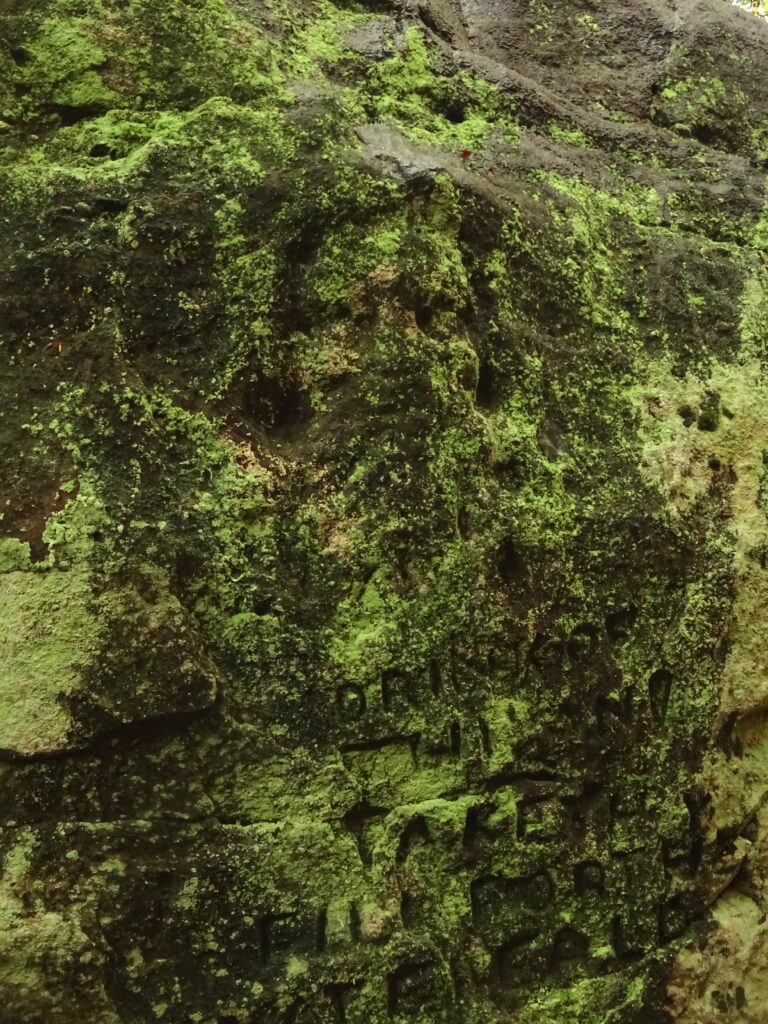
Alan Garner is a relative of my family on my mother's side, and when my mother and I travelled to England in 1980 when I was 11 we went to the area known as Alderley Edge in Cheshire, where Garner had grown up and had set many of his fantasy novels. Alderley Edge features a hilly wooded area (The Edge) which has ancient mystical traditions involving an army of knights who sleep under The Edge, guarded by a wizard. Consulting Wikipedia reveals that the carving of the face of a wizard over a well in The Edge, that I distinctly remember seeing, was carved by Garner's great great grandfather in the mid nineteenth century. Talk about getting your imagination going! I didn't meet Garner on that visit, perhaps because by that point relations were distant, but my mother bought me all of his books, including Red Shift. I read the others, including his first, The Weirdstone of Brisingamen (1960), but not Red Shift, which has been in my possession for forty two years! It had been too adult for me at the time. Supposedly a young adult novel, it in fact reads as a complex work of high modernism. Set in three time periods, the first during modern times (the 1960s I assume), Roman Britain and during the English Civil War (1642 - 1651). The narrative alternates between the three, often without much warning. All three time periods are set in the region around Alderley Edge, mostly to its south in Barthomley and a place called Mow Cop (I checked on Google Maps). The novel is thematically dense, almost to a gnomic degree, although at its heart is a love story. I deliberately did not look up any explanations of its plot and themes, but now that I have it does make much more sense. However I'm pleased that I read it without guidance, as I feel that it is a work that you need to interpret yourself.


Garner at home in 1967


Although Red Shift is wilfully opaque, it features some beautiful prose which, although simple at times, flows along at a pace of its own devising, including some dialogue-heavy passages that sometimes just consist of one word exchanges, particularly in the modern parts. In this regard the narrative is stripped back to its bare-bones in these sections, perhaps reflecting the character's difficulties in truly connecting? Despite this there's enough there in the narrative to latch onto. There's three different love stories, interconnected through place, but separated through time. A stone axe also seems to link the three stories, with it ending up being found by the modern day semi-estranged couple, Tom and Jan. This couple and their circumstances give the reader a narrative anchor from which the other two time-lines are better absorbed, as often it is hard to fathom what is going on during these parts of the novel. The colour red is a thematic link also, with the stone axe being coloured with red ochre (and blood, I assume), red painted faces appear during Roman Britain and Tom alludes to the red shift of galaxies as they recede ever away from our own galaxy. I assume that this is also a metaphor for his alienated mental and emotional state, particularly toward his parents and, to a lesser degree, Jan. Like many modernist texts, it's best to just flow with the narrative, allowing certain themes and plot devices to penetrate. It's a novel that would benefit from multiple readings. If you really want to know what is going on, the previously mentioned Wikipedia entry is long and informative. I'm amazed that Red Shift was marketed to young readers, but perhaps they were more sophisticated in the early 1970's? Overall it's a difficult, but strangely enjoyable novel, manifesting like a mysterious dream that you enjoy during the night, but can't make sense of the next day, and to me, that is a good thing. 

The Wizard at Alderley Edge


Sunday, 24 February 2019

Nightwood - Djuna Barnes (1936)

Rating: Admirable

Almost everything about Nightwood is beautiful, from the eloquent introduction by T.S. Eliot, the intensely baroque language and the special green Faber and Faber edition (as pictured above) that exudes style and class. The novel's content, however, is a different matter altogether. Nightwood's characters are tortured, dissolute and trapped in dysfunctional cycles of their own making. It is also a great example of prime modernist writing, the prose being opaque, elliptical, poetic (Eliot points out in his introduction that lovers of verse would get the most out of the novel), and the narrative is episodic in a fragmented way. It is a typical modernist novel in that the detail defies easy interpretation; especially when the transvestite doctor (during certain nights at least) Mathew O'Connor spouts endless monologues of lyrical but nonsensical opinion and advice to the tortured women involved in a love triangle - Robin Vote, Nora Flood and Jenny Petherbridge, and yet the overall meaning is apparent.*

The novel is known to be one the earliest significant examples of lesbian literature and for that alone it makes for fascinating reading, particularly as the novel is a known example of a roman à clef narrative from that period. However despite Nightwood's reputation and charms the novel did not make for a particularly enjoyable reading experience. Like many modernist narratives it would be best appreciated as part of a literature course at university where all the hidden meanings and arcane language can be teased out and understood. If read as a novel to casually enjoy feelings of tedium gradually creep up, making the short novel a challenge to complete. Nightwood is really frozen in time, like a beautiful leaf preserved in an old book. No one writes like the modernists any more and if they do it ironically seems quaint and out of place. I'm pleased to have finally gotten around to reading it, but it is unlikely that I'll be recommending it to others to read.

* If you must know I believe that the novel represents its characters as being slaves to their subconscious desires and such desires are animalistic, particularly when expressed during the 'wilds of the night', which then leads them to suffer and never find the happiness they desire.


Monday, 15 December 2014

Owls Do Cry - Janet Frame (1957)


Those who are familiar with Jane Champion’s film - An Angel at My Table (1990), would have an awareness of both the hardships and the triumphs of Frame’s life. Owls Do Cry was her first novel and like her admirers work, Patrick White, it is a fine example of high modernism. The style is organic; words tumble along with allusive child-like poetic imagery. It is quite beautiful, but can present a challenge to those unfamiliar with modernist forms bending narratives. Owls Do Cry follows the fortunes of the Withers family, including Daphne, whom is modeled on Frame’s own experiences (although in interviews Frame advised against seeing her work as autobiographical). There is also pointed social satire; revealing New Zealand’s growing middle class to be shallow and hypocritical. The novel is profoundly sad and left me feeling bereft and slightly adrift. I admired the writing but did not enjoy the overall experience; it felt like I was being forced to confront some deep inner core of melancholy. Tackle Owls Do Cry when you are feeling robust and adventurous, otherwise it could turn out to be an emotionally draining experience.

Thursday, 14 November 2013

The Tree of Man - Patrick White (1956)


Rating: Sublime

After many years of good intentions I have finally read a novel by that renowned Australian literary curmudgeon, Patrick White. My 1973 edition of The Tree of Man was given to me by a good friend, who once read out a paragraph to me during a visit on a searing hot summers day. I was captivated by White’s lyrical phrasing and his portrayal of the Australian experience, all from one paragraph. Patrick White is considered to be one of Australia’s great writers and one of the significant writers of twentieth century literature. The Tree of Man certainly presents a convincing case for literary genius, however it also caused me to wonder about White’s relevance in modern Australia.

The Tree of Man traces the life of Stan Parker who, along with his wife, Amy Parker, settle on a patch of land close to Sydney in the first few years of the twentieth century. One could say that it is a family saga, yet without the melodrama that usually inhabits such narratives, thanks largely to White’s modernist style. White’s style isn’t exactly the stream of consciousness of the modernists, rather he colours the narrative with the characters subjective thoughts and feelings; creating a kind of allusive narrative impressionism that imbues the mundane aspects of Stan and Amy’s everyday lives with a very Australian mysticism. 

White’s dense modernist style makes the novel a reasonable challenge to read, but one that is well worth pursuing. The novel has strong existential themes which are explored through the lives of Stan and Amy, as they tend to their dairy farm, have children and deal with the vicissitudes of life. Their lives are  made profound against the background of the elemental Australian landscape, yet White also tears away their certainty, referring to them as “ant man” and “ant woman,” reminding us that the control humans have over our destinies is limited; rendering us merely a small part of a far greater capricious whole. Within this existential context Amy and Stan live, like Adam and Eve, in their bush eden and create their own world. The isolation of their lives, with initially few neighbours in the semi wilderness area, gives an impression of what it was like for the first settlers in Australia. There are floods, bush-fires and thunderstorms that threaten their tenuous existence. Yet despite the challenges they persevere and remain together throughout their lives on the land, representing a triumph of will against a backdrop of uncertainty.


The Tree of Man
 brilliantly portrays the cycles of life, taking Stan and Amy through youth and into middle age. White deals with the psychology of these changes subtly, through their relationships with their son and daughter and the land they live on. Stan and Amy’s relationship evolves through the struggle to understand each other, with Amy often pondering whether she’ll ever really “see into” Stan. As the novel takes them into old age they struggle to understand death and God. White uses old age as a litmus test for the concept of God, or the Christian God at least. Stan is perplexed, whilst Amy takes to the idea more readily. Stan sees God in a gob of spit he produces whilst he is being harassed by a born again evangelist and suddenly his life makes sense, but not the kind of sense that Christianity so earnestly tries to provide.

The last short chapter, only two pages long, beautifully sums up the themes of The Tree of Man and is one of the greatest I’ve ever read. Stan’s grandchild lingers in a wooded gully thinking about his grandfather’s life, feeling helpless and unformed. He decides to write a poem “of life”, a notion that overwhelms him. After a long intense novel filled with White’s allusive, poetic style (poetic realism, I thought to myself over a cup of tea) White is hinting that life itself is poetry; that each person writes their own poetry with their lives and that the essence of a life provides its own meaning, one that is separate to God and religion. 

Although White is rightly considered to be one of literature’s greats, I realised that his writing is deeply unfashionable, in Australia at least. Looking around online I found that I wasn’t the only one to come to this conclusion. I mostly agree with the author of this piece, that White’s modernist style dates his writing, that it is perhaps too dark for most and that the fact that he was Australian makes him peripheral on the world stage. However the notion that ignoring his work has become a bad habit that persists is the most persuasive, and this was certainly true in my case. I ignored White for far too long, so I‘ll end by advising others to not perpetuate this trend, do yourself a literary favour and read Patrick White.