Sunday, 26 February 2023

Beautiful You - Chuck Palahniuk (2014)


Rating: Admirable

Palahniuk is known as a transgressional author, one who takes on taboo or controversial themes in a manner that pushes their boundaries to the extreme. Beautiful You is undoubtably thematically extreme, featuring weird sex, hyper capitalism and male emasculation. Penny Harrigan is the kind of female protagonist, hyperconscious and awkward, just getting by in corporate culture, who would helm an American sit-com across ten seasons, only learning her lessons in the last season. Only this is a Palahniuk novel and Harrigan ends up in the clutches of the worlds richest man, C. Linus Maxwell, who proceeds to experiment on her with an array of sex toys of his own devising. Harrigan is literally driven to life threatening physical extremes by his ministrations. At the same time she's drawn into the world of the super-rich and the attentions Maxwell's former sexual muses, a famous actress and a woman who has become the first female president of America. This is, at least initially, all quite entertaining stuff, especially as you anticipate what Maxwell's plans will do to society, virtually making men and their ineffectual penises and clumsy techniques, obsolete.

This does indeed occur (male obsolescence) and once Harrigan is freed from Maxwell's ministrations after a set amount of time (136 days), she realises just what trouble society is in as Maxwell's new line of sex toys takes the female population by storm. Maxwell is a true evil protagonist flexing his capitalist muscle. a walking cliche, but that's part of the point. In this regard the implacable logic of how he goes about his business in this age is high capitalism, surveillance capitalism and downright exploitative capitalism, really rings true. Harrigan's attempts to rectify the situation are entertaining enough, but about two thirds of the way through what was quite a good novel, things start to become slightly ridiculous, as Palahniuk turns up the dial of extremity. Beautiful You never promised to be an example of sober realism, but where the novel eventually goes to is absurd, particularly the denouement, which involves women driven to homelessness by their sex toy habits, a shotgun wedding, a naked sex guru from Tibet and death by a fiery flying dildo. This novel is a wild ride that fills in some time on the train-ride to work, but it also leaves you feeling a bit empty, kind like impulse buying, followed by buyers regret. Fortunately I didn't buy this novel, nor any sex toys.

Sunday, 19 February 2023

A Moveable Feast - Ernest Hemingway (1964)


Rating: Excellent

I haven't read Hemingway for thirty years! I'm pleased that the book club has forced my hand in this case, as it has proved to be a most enjoyable read (most of the book club members concurred). Hemingway visited Paris in 1956 and recovered some storage trunks from the Hotel Ritz. Inside the trunks he found his journals written while living in Paris in the Twenties. He then pieced together A Moveable Feast as a memoir of that period before he died in 1961. It's fascinating reading, giving an evocative impression of life in Paris during a time when many artists from England, America and Europe lived in France due to the favourable exchange rate and its reputation as an artistic hub. Yet to pen a novel, Hemingway is making a transition from journalism to short-story writing. He rubs shoulders with an amazing array of important historical figures, such as James Joyce (who does not feature greatly in the memoir), Ezra Pound (who does), Ford Madox Ford, Gertrude Stein, Wyndham Lewis and most significantly, Scott and Zelda Fitzgerald. The three chapters that feature the Fitzgeralds make for intriguing reading. Hemingway paints a picture of Fitzgerald that is both critical and flattering. Hemingway, on the other hand, makes it known that he despises Zelda, labelling her as mad and jealous of Scott Fitzgerald's writing.

Hemingway's life in Paris, and latterly for a brief period, Austria, is beautifully portrayed. The characters he interacts with are all rendered fully alive throughout. Interwar Paris was undoubtably a colourful time, but what really makes this book special is the quality and style of Hemingway's prose, something that he is still famous for (other than his apparent 'outdoors man ' machismo). His short, declarative sentences, pared back to the bone, are a pleasure to read. The fact that he talks about writing and trying to become a writer of fiction, rather than to continue as a journalist, makes reading A Moveable Feast all the more compelling. During the time that I haven't read any Hemingway, I've read some of his imitators, or at least those who were inspired by his style, such as Charles Bukowski. Finally reading him again makes me want to go right back to the Hemingway source and read some of his novels. A Movable Feast would make a fine introduction to his writing for those who have never read him, after all, it goes right back to a time when he was a struggling writer, swaying through the streets of Paris after a few too many wines, and associating with writers who had been published already. Now I truly know why Bukowski said that when he was on fire, Hemingway was simply untouchable. 

Sunday, 29 January 2023

Helgoland - Carlo Rovelli (2020)


Rating: Excellent

Carlo Rovelli is an Italian theoretical physicist who has written a number of fascinating books about quantum theory, some of which are still languishing unread in my collection, but I bought Helgoland recently on a trip to Melbourne and, for some intuitive reason, I needed to read it now rather than later. I'm pleased that I did. Rovelli is an important physicist who has worked on the problem of linking classical physics with quantum physics, developing the theory of loop quantum gravity (not the subject of this book). Helgoland begins with Werner Heisenberg's allergy lead retreat to the German island of Helgoland in 1925, where he worked on the the mysteries of atomic behaviour and came up with the observational interpretation of quantum theory. Such insights led directly to the famous thought experiment by Erwin Schrödinger concerning the cat in the box that could either be alive or dead until it is observed. Here's where Rovelli comes in, with the relational interpretation of quantum mechanics, which helps to deal with the problem of reality needing an observer in order to collapse the probability wave functions of the quantum realm into solid observable 'reality'. Confused? Well, first I'd advise you to read one of the best books about quantum theory for the lay-person, Quantum Theory Cannot Hurt You by Marcus Chown (2005), and then read Helgoland. Cutting to the chase, however, relational interpretation posits that as quantum objects interact with other quantum objects, they are 'observed' in the course of interacting. Reality is like a hall of mirrors. In this regard Rovelli's arguments appear sound and compelling.

Heisenberg, had bad allergies

Rovelli is a fine writer, able to convey difficult concepts in a way that can be deciphered by the average person. In my opinion getting some kind of grasp on quantum physics is essential for having a deeper relationship with the universe, and therefore, reality. Rovelli also ventures into philosophical territory, but in a manner that avoids potential eye-rolling. The characters than founded quantum theory are also fascinating characters, Heisenberg, Bohr, Born, Einstein, Engels and Schrödinger, among others, are worth reading about in their own right. Rovelli touches upon these physicists in regards to how they reacted to Heisenberg's insights (that were then backed up by experiments), and it is a compelling story, one that continues today, as Rovelli is just one in a long line of thinkers to tackle quantum mechanic's mysteries. If the relational interpretation of quantum mechanics is correct, then the implications are massive, including doing away with the need for an observer (in terms of humans, life and 'God'). It also, quite possibly, makes the concept that all probabilities exist all at once, with most hidden in parallel universes, redundant. It's a theory that always seemed ridiculous to me. In any case, although Helgoland does not need someone to be reading it for it to exist, go out and buy a copy and give it a read, it will spark those synapses and change the way you view the world.

Helgoland, had no pollen


Monday, 9 January 2023

Losing Face - George Haddad (2022)


Rating: Excellent

The first book club read of the year, and it is a doozy. Losing Face is George Haddad's first full length novel and it is superb. Firstly, Haddad's prose style is snappy and authentic, he hasn't tried anything too stylistically audacious, and the novel is all the better for it. The narrative is well constructed and deals with such weighty themes as rape culture, toxic masculinity, failure to launch, the nature of friendship and generational dysfunction and trauma. If it all sounds bleak, well perhaps it is to a degree, but Haddad writes so well that the story is absorbing and is therefore a pleasure to read. The main protagonist, Joey Harb, is a nineteen-year old lost in Sydney's western suburbs, barely holding down a job at Woolworths and hanging with his best mates, Kyri and Emma and also an assortment of fuck-ups content to put life on the back-burner in order to chase the next high. There's Joey's extended family, his mother Amal, brother Alex and, most significantly his grandmother, Elaine, who is an important character in her own right. All of the characters are totally authentic, it's as if you are there among them, part of the family, or out of it on drugs at a dance festival. Haddad gets the dialogue totally right, in particular the interactions between Elaine and her Lebanese friends and between Joey and his mates, forever on their phones and using slang to express their inarticulate trains of thought.

The reader gets to know Joey quite readily, which makes his inevitable descent into a terrible situation an ever present threat. When this part of the book begins the dread is palpable. The sexual assault scenes are brilliantly written, being both too much to bear and unputdownable. Joey's life is forever changed due to his naiveté and lack of awareness of the severity of the situation he finds himself in. The aftermath is compelling in its inevitably. Haddad cleverly weaves many shades of grey into the narrative, both in terms of Joey's situation and that of his grandmother's, Elaine, who has her own dysfunctions to deal with. The court scenes are mainly told through her eyes, adding layers of pathos to an unfortunately familiar tragic story. Most impressive is the denouement, in which Joey still finds it hard to find a way forward beyond the kind of aimlessness and lifestyle that endangered him in the first place. There's a path to redemption, but it's uncertain. Losing Face should be read by all of the Joey's out there, but they'd never read such a novel. Perhaps Losing Face should be part of the school curriculum, it would be a challenging but worthwhile read for teenagers growing up in the me-too era. 


Friday, 30 December 2022

The Year in Reading: 2022


Although this blog is about the books I read, what can often happen is the things going on in your life can have a strong influence on what you end up reading. This year was eventful and life changing. I began it pretty much crippled by a right hip that needed replacing. I ended up having nine weeks off of work and had the surgery in May. This meant that I've read less book club books this year, which also meant I got around to reading some books I had been meaning to read for a while, such as The Little Friend by Donna Tartt (2002), which is my book of the year. I read Mars by 1980 by David Stubbs (2018) during this period as well, which meant that I had time to listen to the weird early electronic music referenced by the book. It really helped me get through the recovery period, as did reading Lives of the Stoics by Ryan Holiday and Stephen Hanselman (2020), which, for obvious reasons, was really appropriate. 


Donna Tartt - responsible for the read of the year

I'm pleased to have finally read some Philip Roth (Sabbath's Theater  - 1995), and the Alan Garner novel I'd been carrying around from move to move since 1980 (Red Shift - 1973). Some of these were fitted around and during two great holidays post hip replacement, including a cruise off the Kimberley coast, which was a life-changing experience. Weirdly this was were I finished reading Sabbath's Theater! Reading is also somewhere you can take solace, and it helped enormously during the aftermath of my mother's death at the end of October. Appropriately by the time that had happened I'd finished Crying in H Mart by Michelle Zauner (2021), which thematically was mainly about her mother's death. Strangely even reading The Dice Man by Luke Rhinehart (1971) helped in this regard, perhaps because it was so irreverent. As usual I wished that I'd read more, but there was a lot going on. As always there's the worst book of the year, and that prize goes to Something to Hide by Elizabeth George (2022), which I could not even get half way through. By default it was also the worst book club book, the best being Crossroads by Jonathan Franzen (2021), which featured the usual Franzen qualities we know and love. So, onto next year, onwards and upwards - ever upwards forever in fact!


Tuesday, 27 December 2022

The Velvet Underground: New York Art - Edited by Johan Kugelberg (2009)


Rating: Excellent

I've again been making an effort to read my many large coffee table style books, as usual at a very gradual pace. The Velvet Underground are my all time favourite band for all kinds of reasons, some obvious and some for personal reasons of my own. Fittingly this book is made for fans such as I. It was deliberately put together as a quality coffee-table arthouse book focussing specifically on media that hadn't quite been captured by other publications and the various Velvet Underground box sets. It's a brilliant celebration of this unique and highly influential band. The main focus of the book is a multitude of incredible rare photos of the band throughout its history. It's worth owning just for that reason. There's also a large collection of posters and flyers advertising their live shows, a great portion of which I have never seen before. 


The book's text entails such curios as newspaper cuttings of reviews of some of the shows they did during the Andy Warhol era, including one great headline that reads: 'Shock Treatment for Psychiatrists.' There's an amazing short essay written by guitarist, the reticent Sterling Morrison (RIP), about the band's early days. Perhaps the best section of text is a long interview with Lou Reed and Doug Yule from 1970, in which they talk about such topics as recording Loaded (1970) and their opinions of other acts, such as the Beatles (they loved them) and Frank Zappa, whom they loathed (something that is well known, but to read the details of Lou's antipathy is fascinating). Among other highlights is Lester Bangs' long review of the Loaded album, which is entertainingly verbose. This is just a superb book. I'd recommend Velvet's fans to search out this book, but unfortunately it is now worth $600+ Australian dollars, which is a bit rich for even the most rabid fans. Hopefully it will be republished one day, meanwhile listen to their sublime albums, some of the greatest in the rock canon. 


Monday, 19 December 2022

Red Shift - Alan Garner (1973)


Rating: Excellent

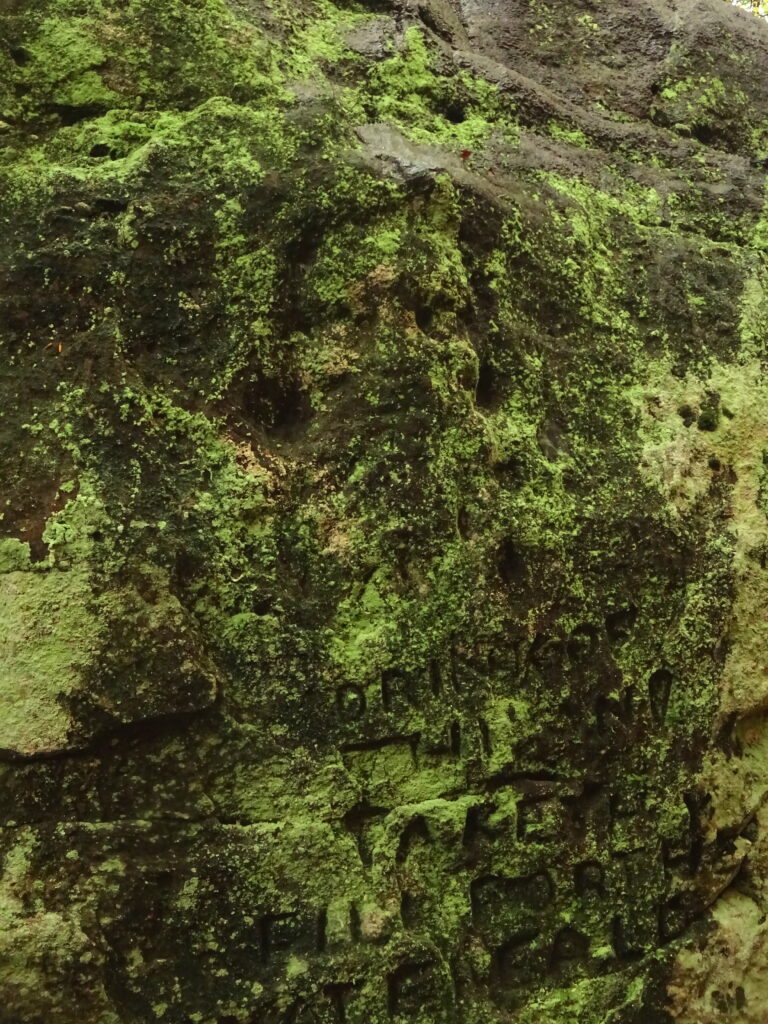
Alan Garner is a relative of my family on my mother's side, and when my mother and I travelled to England in 1980 when I was 11 we went to the area known as Alderley Edge in Cheshire, where Garner had grown up and had set many of his fantasy novels. Alderley Edge features a hilly wooded area (The Edge) which has ancient mystical traditions involving an army of knights who sleep under The Edge, guarded by a wizard. Consulting Wikipedia reveals that the carving of the face of a wizard over a well in The Edge, that I distinctly remember seeing, was carved by Garner's great great grandfather in the mid nineteenth century. Talk about getting your imagination going! I didn't meet Garner on that visit, perhaps because by that point relations were distant, but my mother bought me all of his books, including Red Shift. I read the others, including his first, The Weirdstone of Brisingamen (1960), but not Red Shift, which has been in my possession for forty two years! It had been too adult for me at the time. Supposedly a young adult novel, it in fact reads as a complex work of high modernism. Set in three time periods, the first during modern times (the 1960s I assume), Roman Britain and during the English Civil War (1642 - 1651). The narrative alternates between the three, often without much warning. All three time periods are set in the region around Alderley Edge, mostly to its south in Barthomley and a place called Mow Cop (I checked on Google Maps). The novel is thematically dense, almost to a gnomic degree, although at its heart is a love story. I deliberately did not look up any explanations of its plot and themes, but now that I have it does make much more sense. However I'm pleased that I read it without guidance, as I feel that it is a work that you need to interpret yourself.


Garner at home in 1967


Although Red Shift is wilfully opaque, it features some beautiful prose which, although simple at times, flows along at a pace of its own devising, including some dialogue-heavy passages that sometimes just consist of one word exchanges, particularly in the modern parts. In this regard the narrative is stripped back to its bare-bones in these sections, perhaps reflecting the character's difficulties in truly connecting? Despite this there's enough there in the narrative to latch onto. There's three different love stories, interconnected through place, but separated through time. A stone axe also seems to link the three stories, with it ending up being found by the modern day semi-estranged couple, Tom and Jan. This couple and their circumstances give the reader a narrative anchor from which the other two time-lines are better absorbed, as often it is hard to fathom what is going on during these parts of the novel. The colour red is a thematic link also, with the stone axe being coloured with red ochre (and blood, I assume), red painted faces appear during Roman Britain and Tom alludes to the red shift of galaxies as they recede ever away from our own galaxy. I assume that this is also a metaphor for his alienated mental and emotional state, particularly toward his parents and, to a lesser degree, Jan. Like many modernist texts, it's best to just flow with the narrative, allowing certain themes and plot devices to penetrate. It's a novel that would benefit from multiple readings. If you really want to know what is going on, the previously mentioned Wikipedia entry is long and informative. I'm amazed that Red Shift was marketed to young readers, but perhaps they were more sophisticated in the early 1970's? Overall it's a difficult, but strangely enjoyable novel, manifesting like a mysterious dream that you enjoy during the night, but can't make sense of the next day, and to me, that is a good thing. 

The Wizard at Alderley Edge