Sunday, 17 June 2012

The Player of Games – Iain M. Banks (1988)


Rating: Excellent

Iain M. Banks Culture novels represent some the greatest science fiction of the last twenty-five years. The Player of Games is the second of nine Culture novels released so far and like the other Culture novels it revels in its ability to go out on a limb and explore big ideas whilst providing well-developed characters and compelling plots.

Perhaps the greatest achievement of Banks’ science fiction writing is his ability to overturn tired clichés of the genre and make them exciting and fresh again. Banks’ imagination is something to admire – it seems that he is never short of a great idea. It also helps that Banks’ writing is highly literate, displaying a level of sophistication not always seen in science fiction.

The Culture is a representation of human civilisation thousands of years into the future. In The Player of Games one character refers to the benefits of eleven thousand years of space travel. They travel in style too, with a range of massive spacecraft that are ‘Minds’ – conscious, sentient, intelligent and with senses of humour. The Culture also has varied habitats. This time the protagonist lives on an artificial structure orbiting a sun with ‘plates’ - massive artificially constructed environments with landmasses and oceans. Another feature of the Culture are the ‘drones’ – sentient machines that share equal rights with humans. Basically the Culture is a near utopian society in which technology is almost boundless and where no needs or wants remain unfulfilled. Of course it’s not as simple as that and the Culture certainly has its dark side - represented by the mysterious and sometimes nefarious organisations ‘Special Circumstances and ‘Contact.’ 

The Player of Games is the story of Jernau Morat Gurgeh, one of the greatest game players the Culture has ever seen. As far as protagonists go Gurgeh is complex, flawed and grumpy but likeable. In fact I think that Gurgeh is modelled on the author himself. Gurgeh is described bearded with pointed features, which is how you could describe Banks himself.

After years of winning and luxuriating within the Culture Gurgeh is bored. When he mentions this to his drone friend Chamlis, some strings are pulled and Gurgeh finds himself being visited by a rather contrite drone from Contact. Gurgeh eventually finds himself on the way to the Small Cloud of Magellan (called the Lesser Cloud by the Culture) to the Empire of Azad - a barbarous but complex civilisation that is dominated by a game that mimics life itself and helps decide who will rule and who will fall by the wayside.

Iain M. Banks - brilliant even in the absence of colour
What transpires is compelling entertainment and is never predictable. Having said that I guessed what was really going on at a certain point, but then perhaps I’ve read too many science fiction novels. Banks doesn’t bog down the narrative by trying to explain how the game works, instead he focuses on the psychological intensity of actually playing the game itself for both Gurgeh and his opponents. Along the way there are plenty of entertaining encounters with the Azadians, a race of beings that have three sexes and whose society is intensely hierarchical.

Perhaps the most entertaining section of the book is when the game players travel to the planet of Echronedal, a fire planet with a bizarre ecology dominated by the incandescence – a strip of volcanic fire that travels around the equator. The planet’s ecology is based around this destructive fire and Banks makes the effort to explain how it all works. Banks’ imagination is wild but he always makes the effort to build a cogent world around his sometimes outré ideas. On Echronedal Banks also indulges in his love of castles, with the final rounds of the game being played within the halls of a giant and sombre castle. Here the novel reaches an exciting and terrible climax.

Player of Games is one of the best Culture novels I’ve read. As usual Banks delivers well-drawn characters, including the machines, coupled with a tightly constructed plot that is littered with excellently executed ideas. You couldn’t ask for more really and I’m looking forward to finally catching up with the last couple of Culture novels – Matter (2008) and Surface Detail (2010) before the new one – The Hydrogen Sonatas is released. If you are curious about modern science fiction or have never read Banks, then head on down to your favourite bookstore (you do have one right?) and invest in this great writer’s works, you will not regret it.

Monday, 28 May 2012

Books Versus E-Readers


Recently it was Library and Information week at my library. I recalled that the previous year I had co-presented information sessions showing people how to use e-readers. The sessions were popular, as they were this year. Since last year I’ve noticed that e-reader use has increased amongst my fellow train commuters and with library patrons. With bookstore chains such as Borders collapsing (mainly due to online commerce?) and with talk of the possible demise of the book in the media I wonder what we may gain or more importantly what we may lose if e-readers become the medium of choice for publishers and readers alike.

The main thing I took away from presenting the information sessions about e-readers is that I didn’t like them. Some people I know may roll their eyes due to the fact that I don’t even own a mobile phone – but I’m no Luddite. I can understand the convenience of being able to store hundreds of books on one device. They solve the problems of lugging books away with you on holiday, or having to find room to store books you’ve bought over the years. Another advantage is if you need to read a large print version you can just increase the font size, whilst in the book world you need to wait until the large print version is released. Downloading books is also cheaper and saves you time because you don’t have to go to a shop.

There are disadvantages of course. The e-reader can break down and if the data is not backed up then you’ve just lost your collection. I’ve also been told, from a library patron, the tale of a woman who took an e-reader with her on holiday to Bali and the screen failed, leaving her with nothing to read.

Although these are valid issues, my views regarding e-readers are not particularly concerned with their inherent problems, but rather the potential demise of the overall experience that books provide. For a start I don’t like the idea of everything I read looking the same. E-readers are, at the moment, banal looking objects. I love the variety that books offer – the cover artwork, their size, shape, feel and smell. I love the way these objects look on my bookshelf, or scattered about my home. In this way they become a part of your life, reminding you of what you have read and also holding the promise of what you may read next.

A collection of books at home and the books on the shelves in a bookstore offer a sublime sensory experience. Quite simply there is no romance or adventure to be had from e-readers. You can’t book cross with an e-reader and you can’t lend a well-loved and battered old copy of a novel to a friend via an e-reader. You can’t go in search of a first edition copy of your favourite novel with that special cover art or author’s signature – it becomes meaningless in the e-reader world.

I guess what I’m getting at is that e-readers devalue the cultural impact of books. Do we want to live in a world in which books are reduced to data and displayed as pixels on the bland screens of e-readers? In the rush of progress important cultural artifacts can be swept away and almost forgotten about. A good analogy is when compact discs became the principal medium for recorded sound. We gained convenience and a clean sound but lost all the natural warmth and presence that vinyl records provided.

I believe that books will survive the rush towards the digital medium. Vinyl records have survived and over the last twenty years sales have increased steadily. The same situation may come to pass with books. Apparently the recent hardcover book release of Murakami’s novel 1Q84 sold in huge quantities. The allure of a great writer published in a quality format is an indication that there will always be a market for books. Independent bookstores that offer quality books can survive and if you want to experience that special feeling of browsing shelves of books for your next read, you will still be able to indulge yourself.

So, what do you think - e-readers or books? Will books survive or will e-readers become ubiquitous on the morning train to work?

Monday, 21 May 2012

That Deadman Dance – Kim Scott (2010)


Rating: Excellent

Kim Scott is a Perth writer of Aboriginal decent who has previously won the Miles Franklin Award for his novel – Benang (1999). The Miles Franklin Award is Australia’s premier literary prize and Scott is in the fine company of previous winners such as Peter Carey, Tim Winton and Patrick White. That Deadman Dance has won Scott his second Miles Franklin Award and like his previous work it involves a narrative that provides an examination of Aboriginal Australia.

The novel is set in the colony that would go on to be called Albany in the period 1833 to 1844. It is written in the third person from the perspective of both the colonists and the Aboriginal people known as Noongars. Albany was the first colony to be established in Western Australia, preceding the capital – Perth, by three years.

In Scott’s author’s notes at the end of the novel he indicates that the Albany region was known as “the friendly frontier” due to the relatively peaceful relationship between the settlers and the Noongars. The principle Noongar character is Wabalanginy, known as Bobby to the colonists. Bobby is the bridge between the two cultures and we meet him on the very first page. He’s a charismatic character who charms both the colonists and his fellow Noongars. It’s Bobby who performs the “deadman dance” - a dance that mimics the effects of European diseases that wipe out a significant portion of Aborigines throughout Australia.

Scott’s writing is an interesting proposition. Stylistically it can be impressionistic and the narrative is not always linear so that events can seem jumbled up in an almost organic fashion. Not having read his other books I’m not sure if this is his usual style, or whether it is a particular stylistic choice that conveys how the Noongar people perceived their world. Either way once you get used to Scott’s writing it becomes quite an engaging way to spin a tale. Scott’s descriptions of the Australian bush and its animals are also beautiful and really capture the uniqueness of the Australian wilderness, with its primeval atmosphere of isolation and immense age.

The colonist characters provide an effective insight into just how tough it must have been to live in such an isolated region. Killam, an ex soldier and convict Skelly are certainly rugged individuals who make their way as best they can in an alien environment. How they carry themselves and the decisions they make are in direct contrast to the Noongar characters such as Bobby and the elder – Menak. Yet somehow the divergent groups find a middle path and benefit from each-others technology and knowledge. The contrast between the two groups is one of the ways in which Noongar culture is revealed to the reader and it works quite well.


There’s trouble of course, in the form of spearings, shootings, thieving and tension created by the exploitation of the whales that travel down the coast. The sections detailing the whaling, carried out in a bay where the poor creatures stop to rest, have an emotional punch and are also fascinating in a macabre way. It’s in this context that the mostly British colonists, the Noongars and American whalers converge into a mostly cooperative group, that is until the whales start to become scarce.

The quality of Scott’s writing is such that I can understand why That Deadman Dance won numerous awards. Scott readily evokes time and place as well as culture and the inevitability of historical change. The book is both heartening and sad – it reveals the promise of what could have been and therefore saddens due to the contrast of what followed for the Noongars and their fellow Aborigines throughout Australia.

Unfortunately I was not ready for this book as I was not in the mood for a novel about colonial Australia. This is sometimes the case when a novel read for a book club does not correspond with what you’d like to be reading at the time. In hindsight this saddens me as I feel like I did not benefit from Scott’s deft handling of a significant time in Australia’s history; but for other readers I recommend That Deadman Dance as a book worthy of your attention.

Wednesday, 9 May 2012

The 10,000 Year Explosion: How Civilization Accelerated Human Evolution – Gregory Cochran and Henry Harpending (2009)


Rating: Admirable

As a long time reader of science books I was immediately attracted to this book due to its great title – titles are important, take note publishers. The last science book I read was the great The Fifth Miracle by Paul Davies, which was an examination of how life evolved. Cochran and Harpending’s book promised an argument against the long held theory that humans stopped evolving fifty thousand years ago, just after emerging out of Africa. The book describes itself as the “…the latest edition to the fast emerging discipline of biohistory.”  There’s been quite a bit of news related to this area lately, so I thought that it was time to give it a read.

The book opens with a refutation of “conventional wisdom”, with the authors claiming that human evolution has accelerated in the last ten thousand years due to various selection pressures, such as agriculture, geographic expansion and climate change. They go on to examine the period that started fifty to forty thousand years ago when modern humans moved into the European territories of the Neanderthal. Ten thousand years later the Neanderthal were extinct and humans were flourishing. No one knows for sure but it seems that humans displayed better adaptations such as advanced language, tools and hunting techniques. There is convincing genetic evidence that we interbreed with Neanderthals and picked up and kept various advantageous genes – just ask Ozzy Osbourne.

The ensuing four chapters examine the impact of the advent of agriculture some ten thousand years ago and how the changes to what we ate affected our genetic makeup; the genetic flow of humanity as expressed by selective sweeps of particular genes and also the impact of expansion on humans throughout the globe. A succinct summary - but if you want to know the facts then read the book! But is it worth reading?

The ideas presented in The 10,000 Year Explosion are certainly well argued. The authors blend history, archaeology, paleontology and biology to weave their arguments convincingly. They refer to their work as “genetic history” – a “new kind of history.” This is all very well but unfortunately the flaw of this book is that the writing style is relatively bland. There is an effort to engage and give the facts some personality, but as interested as I was in the arguments presented I often found myself bored. I believe that writing popular science is a tricky thing, because, after all, you don’t want to dumb it down; but also you don’t want to put the average reader off either. After reading this book I appreciate science writers such as Paul Davies and Marcus Chown for their efforts to both explain and engage.


The 10,000 Year Explosion
ends with a case study of the Ashkenazi Jews – Jews that were confined to Europe from medieval times and that were restricted to money lending and clerical professions; the kind of jobs that required a certain level of intelligence. The combination of the demands of their profession and their tendency to marry within their faith meant that the European Jews were selected for a higher intelligence than Jews in the Middle East. Five hundred or so years later descendants of this group were making the major scientific breakthroughs throughout many disciplines and they also displayed higher IQs than other groups. A fascinating case study, but once again the bland writing created a nagging sense of boredom.

The story of human evolution is an amazing tale to behold - one that’s obsessed me on and off for years. It’s compelling, fascinating and most of all it’s our story. Unfortunately this book does not really capture the sense of wonder that our story can engender, which is a shame. Read this book if you want the facts, but perhaps look elsewhere if you want to feel that elusive sense of wonder. Although I was slightly disappointed overall, the one interesting thing this book did do for me was to make me ponder just how our present point in human evolutionary history will be viewed in five hundred years; and that’s not such a bad thing.

Monday, 30 April 2012

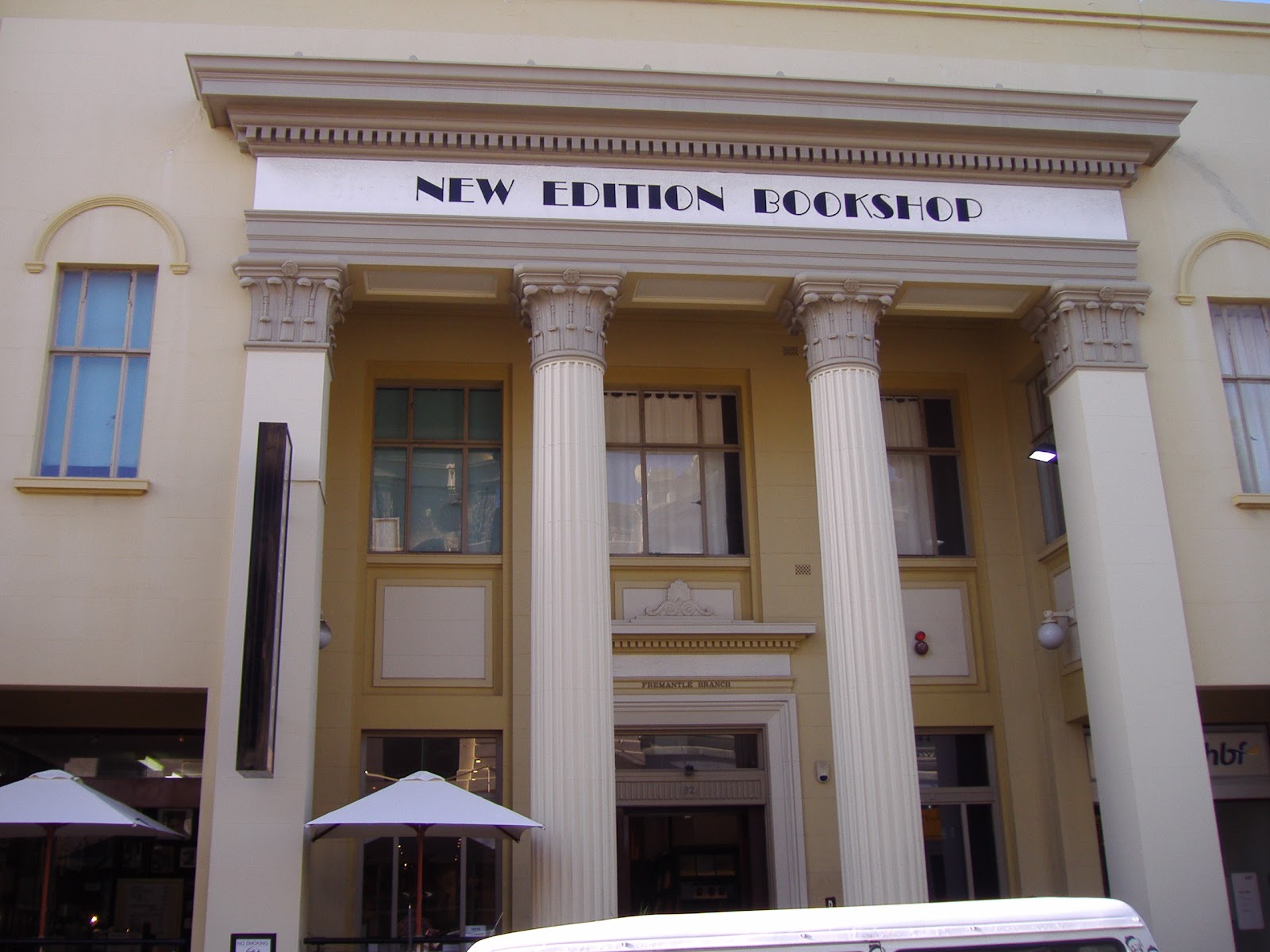
New Edition Bookshop – Fremantle, Western Australia


New Edition has had a long history in Fremantle, Perth’s port city. Initially established in a small shop on the main cappuccino strip of downtown Fremantle, it moved about five years ago into an old bank building on High St. This building makes New Edition an attractive place to shop for books. With a classical looking façade sporting what are possibly Greek Ionic columns and a spectacular entrance, the building oozes character. 


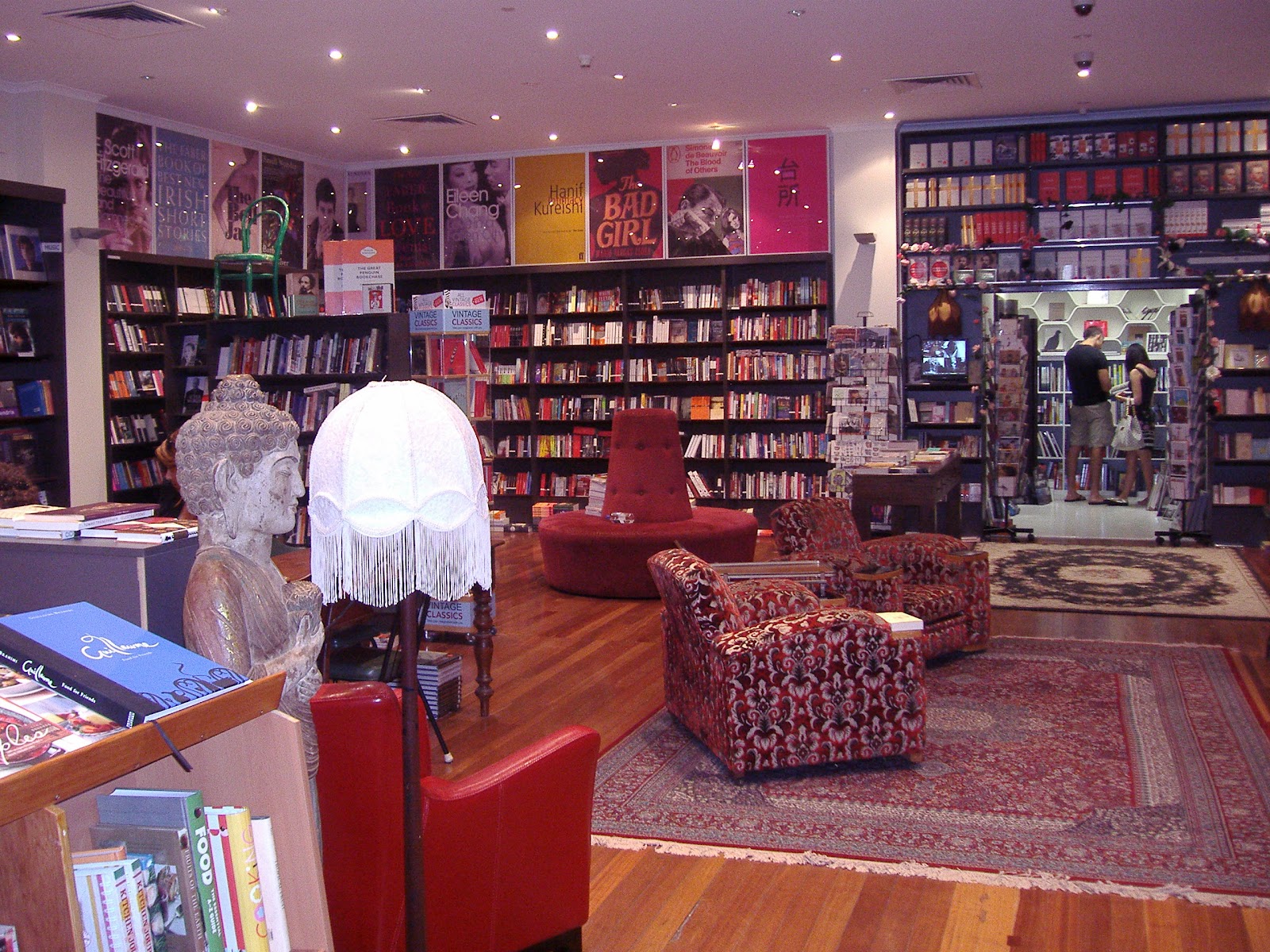
It’s a huge shop and one of the great things about visiting New Edition are the comfortable chairs and tables set up for browsing your potential purchases. I love the layout, with the ceiling high wooden shelves and the lamps and sculptures. Overall it’s decked out very tastefully with rugs and posters and due to the character of the old bank interior you really don’t want to leave in a hurry. If you go to the very back of the huge space you’ll see the former bank vaults with the original doors intact. 


One of New Edition’s specialties is a wide range of reference books covering architecture, cooking, design, art, theatre, music and photography, amongst other subjects. Their stock is beautiful, varied and full of hard to get editions. The fiction section has everything you need coupled with all the books you didn’t know you needed. I find it interesting that they mix the science fiction in with the literature – no literature/genre distinctions here. Make sure you have plenty of money if you visit, as it is extremely hard to resist buying just one book. 


New Edition is a high-end boutique bookshop and well worth visiting when you are in Fremantle. They have recently established a tiny coffee shop at the front of the store so that you can boost your capacity to take it all in with tea or coffee; or you can just sit out on their front verandah. Another great thing is that just down the street the Bill Campbell Book Store awaits to fulfill your second-hand book needs. Give them both a visit and help keep bookshops alive – they are not simply just businesses, but are also important cultural hubs in our community.


Monday, 23 April 2012

Muriel Spark Reading Week


Over at the great book blog - Stuck in a Book they are hosting a Muriel Spark reading week. If you'd like to contribute or comment then visit the site here. I will be contributing at some stage in a minor way. It's a great idea and I think that it will be well supported.

Meanwhile - keep reading!

Monday, 16 April 2012

The Sisters Brothers – Patrick deWitt (2011)


Rating: Admirable

Waiting in my chiropractor’s treatment room I spied this book on his bookshelf. I was looking it over when he came in and he immediately insisted that I borrow it. He was very enthusiastic about the book and so I obliged. After reading the book I now know that my good-natured chiropractic practitioner is a fan of dark humour and a high body count. He also knows what he is talking about because The Sisters Brothers is a fine novel and also one that manages to reinvigorate the Western for a modern palette by going beyond genre conventions into the realm of literature.

Set in 1850 on the west coast of America, the novel concerns the picaresque journey of two brothers who are in the employ of the Commodore (a wealthy thug basically) as hired killers on the trail of a strange individual called Hermann Kermit Warm. Charles is the eldest brother and is also the most headstrong and violent. Eli is the novel’s narrator and voice of reason amongst the carnage. Eli and Charles are infamous killers and they attract and involve themselves in various killings and misfortunes, many of which they take in their stride with psychopathic aplomb.

There is a great deal of casual black humour associated with the situations the brothers get themselves into and Eli’s dry observations are often both entertaining and drolly insightful. Despite being dysfunctional killers in the employ of a powerfully evil businessman, De Witt’s depiction of the brothers makes them very sympathetic characters. Eli’s predilection towards questioning the validity of his profession and to yearn for a more settled lifestyle is contrasted with Charles’s confident and bloodthirsty attitude. Despite this Eli’s love for his brother shines through. We also see Eli clumsily attempt to woo various women and treat strangers fairly until proven otherwise. Eli also cares deeply for his ineffectual horse, which at one stage he saves from a bear and keeps riding it even though it is seriously compromised by a mauled eye. He’s a killer with a heart of gold it seems.


The novel benefits from the simple yet effective plot. After the Sisters brothers manage to become sidetracked into all kinds of adventures on their way to kill Hermann Warm, they arrive in California to find that Henry Morris (a dandy informer in the employ of the Commodore) has absconded with their target for the goldfields of California. Here’s where the tale becomes very dark indeed. Whether or not this tale is a cautionary one, or has some kind of allegorical subtext, is very much up to the reader. I cannot make up my mind just how deep deWitt’s tale goes, but fortunately you do not need to worry either way, as the novel is very entertaining in any case.

Personally I’m a fan of spaghetti westerns and the HBO series Deadwood and I find this period in American history to be fascinating, even via potentially historically dubious mediums. So the plot held great entertainment value for me and I appreciated that deWitt made the effort to give the characters historically authentic speech patterns and turns of phrase. At least it seemed authentic to me when comparing it to Deadwood, in which the producers went for authenticity, unlike their series Rome in which the Romans spoke like modern day citizens.

I was sorry when this novel ended as I’d become attached to the Sisters brothers and was thoroughly hooked into caring about what happened to them. The Sisters Brothers was short listed for the 2011 Man Booker Prize, which is in many ways better than actually winning it, which seems to be a bit of a curse these days. The Sisters Brothers is not the greatest book ever written, but it is an example of how to write a tale that manages to be both literate and engaging. Meanwhile I may well check out deWitt’s debut novel Ablutions (2009), which has Bukowskiesque themes that I find very attractive in a book.