Friday, 30 December 2022

The Year in Reading: 2022


Although this blog is about the books I read, what can often happen is the things going on in your life can have a strong influence on what you end up reading. This year was eventful and life changing. I began it pretty much crippled by a right hip that needed replacing. I ended up having nine weeks off of work and had the surgery in May. This meant that I've read less book club books this year, which also meant I got around to reading some books I had been meaning to read for a while, such as The Little Friend by Donna Tartt (2002), which is my book of the year. I read Mars by 1980 by David Stubbs (2018) during this period as well, which meant that I had time to listen to the weird early electronic music referenced by the book. It really helped me get through the recovery period, as did reading Lives of the Stoics by Ryan Holiday and Stephen Hanselman (2020), which, for obvious reasons, was really appropriate. 


Donna Tartt - responsible for the read of the year

I'm pleased to have finally read some Philip Roth (Sabbath's Theater  - 1995), and the Alan Garner novel I'd been carrying around from move to move since 1980 (Red Shift - 1973). Some of these were fitted around and during two great holidays post hip replacement, including a cruise off the Kimberley coast, which was a life-changing experience. Weirdly this was were I finished reading Sabbath's Theater! Reading is also somewhere you can take solace, and it helped enormously during the aftermath of my mother's death at the end of October. Appropriately by the time that had happened I'd finished Crying in H Mart by Michelle Zauner (2021), which thematically was mainly about her mother's death. Strangely even reading The Dice Man by Luke Rhinehart (1971) helped in this regard, perhaps because it was so irreverent. As usual I wished that I'd read more, but there was a lot going on. As always there's the worst book of the year, and that prize goes to Something to Hide by Elizabeth George (2022), which I could not even get half way through. By default it was also the worst book club book, the best being Crossroads by Jonathan Franzen (2021), which featured the usual Franzen qualities we know and love. So, onto next year, onwards and upwards - ever upwards forever in fact!


Tuesday, 27 December 2022

The Velvet Underground: New York Art - Edited by Johan Kugelberg (2009)


Rating: Excellent

I've again been making an effort to read my many large coffee table style books, as usual at a very gradual pace. The Velvet Underground are my all time favourite band for all kinds of reasons, some obvious and some for personal reasons of my own. Fittingly this book is made for fans such as I. It was deliberately put together as a quality coffee-table arthouse book focussing specifically on media that hadn't quite been captured by other publications and the various Velvet Underground box sets. It's a brilliant celebration of this unique and highly influential band. The main focus of the book is a multitude of incredible rare photos of the band throughout its history. It's worth owning just for that reason. There's also a large collection of posters and flyers advertising their live shows, a great portion of which I have never seen before. 


The book's text entails such curios as newspaper cuttings of reviews of some of the shows they did during the Andy Warhol era, including one great headline that reads: 'Shock Treatment for Psychiatrists.' There's an amazing short essay written by guitarist, the reticent Sterling Morrison (RIP), about the band's early days. Perhaps the best section of text is a long interview with Lou Reed and Doug Yule from 1970, in which they talk about such topics as recording Loaded (1970) and their opinions of other acts, such as the Beatles (they loved them) and Frank Zappa, whom they loathed (something that is well known, but to read the details of Lou's antipathy is fascinating). Among other highlights is Lester Bangs' long review of the Loaded album, which is entertainingly verbose. This is just a superb book. I'd recommend Velvet's fans to search out this book, but unfortunately it is now worth $600+ Australian dollars, which is a bit rich for even the most rabid fans. Hopefully it will be republished one day, meanwhile listen to their sublime albums, some of the greatest in the rock canon. 


Monday, 19 December 2022

Red Shift - Alan Garner (1973)


Rating: Excellent

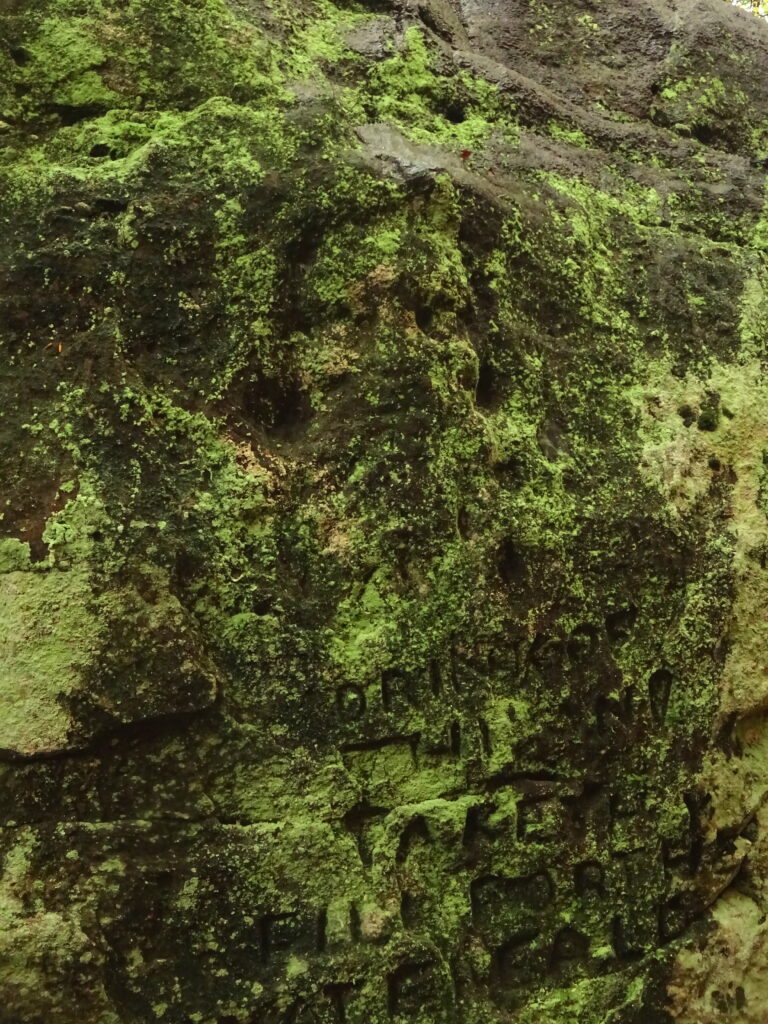
Alan Garner is a relative of my family on my mother's side, and when my mother and I travelled to England in 1980 when I was 11 we went to the area known as Alderley Edge in Cheshire, where Garner had grown up and had set many of his fantasy novels. Alderley Edge features a hilly wooded area (The Edge) which has ancient mystical traditions involving an army of knights who sleep under The Edge, guarded by a wizard. Consulting Wikipedia reveals that the carving of the face of a wizard over a well in The Edge, that I distinctly remember seeing, was carved by Garner's great great grandfather in the mid nineteenth century. Talk about getting your imagination going! I didn't meet Garner on that visit, perhaps because by that point relations were distant, but my mother bought me all of his books, including Red Shift. I read the others, including his first, The Weirdstone of Brisingamen (1960), but not Red Shift, which has been in my possession for forty two years! It had been too adult for me at the time. Supposedly a young adult novel, it in fact reads as a complex work of high modernism. Set in three time periods, the first during modern times (the 1960s I assume), Roman Britain and during the English Civil War (1642 - 1651). The narrative alternates between the three, often without much warning. All three time periods are set in the region around Alderley Edge, mostly to its south in Barthomley and a place called Mow Cop (I checked on Google Maps). The novel is thematically dense, almost to a gnomic degree, although at its heart is a love story. I deliberately did not look up any explanations of its plot and themes, but now that I have it does make much more sense. However I'm pleased that I read it without guidance, as I feel that it is a work that you need to interpret yourself.


Garner at home in 1967


Although Red Shift is wilfully opaque, it features some beautiful prose which, although simple at times, flows along at a pace of its own devising, including some dialogue-heavy passages that sometimes just consist of one word exchanges, particularly in the modern parts. In this regard the narrative is stripped back to its bare-bones in these sections, perhaps reflecting the character's difficulties in truly connecting? Despite this there's enough there in the narrative to latch onto. There's three different love stories, interconnected through place, but separated through time. A stone axe also seems to link the three stories, with it ending up being found by the modern day semi-estranged couple, Tom and Jan. This couple and their circumstances give the reader a narrative anchor from which the other two time-lines are better absorbed, as often it is hard to fathom what is going on during these parts of the novel. The colour red is a thematic link also, with the stone axe being coloured with red ochre (and blood, I assume), red painted faces appear during Roman Britain and Tom alludes to the red shift of galaxies as they recede ever away from our own galaxy. I assume that this is also a metaphor for his alienated mental and emotional state, particularly toward his parents and, to a lesser degree, Jan. Like many modernist texts, it's best to just flow with the narrative, allowing certain themes and plot devices to penetrate. It's a novel that would benefit from multiple readings. If you really want to know what is going on, the previously mentioned Wikipedia entry is long and informative. I'm amazed that Red Shift was marketed to young readers, but perhaps they were more sophisticated in the early 1970's? Overall it's a difficult, but strangely enjoyable novel, manifesting like a mysterious dream that you enjoy during the night, but can't make sense of the next day, and to me, that is a good thing. 

The Wizard at Alderley Edge


Tuesday, 29 November 2022

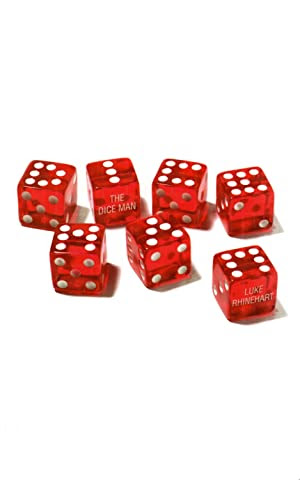
The Dice Man - Luke Rhinehart (1971)


Rating: Excellent

The Dice Man is perhaps one of the most famous cult novels of all time. By the time I was a teenager in the 1980s I'd heard of it, even though I knew no one who had actually read it. Just hearing about the concept was enough to get the imagination going. Now that I've finally read the novel I realise just how influential it was. I detect its influence on writers such as Chuck Palahniuk and Bret Easton Ellis, for example. Certainly the protagonist, also called Luke Rhinehart, reminds me of a toned down Patrick Bateman from American Psycho (1991). Although Rhinehart is not as an extreme a character as Bateman, he does appear to embody the disaffection and ennui at the heart of the middle-class professional in mid to late century America. The novel begins with Rhinehart despairing about his outwardly perfect life; with a wife, two children and a career as a notable psychiatrist (as was the author himself, geddit?). At this point the prose seems a touch self conscious and I was thinking that the novel was going to be an ordeal, however quite quickly, at the throw of a die, no less, it became fascinating, fun and outrageous. Rhinehart becomes a compelling character, one whom you want to follow down the 'liberating' path of putting the course of your life in the die's hands. The tone of the novel is one of revolutionary fervour, in keeping with the times it was written and published in, but it is also an irreverent ride into the sunset, not caring where it ends up.

The Dice Man is a touch dated, I can imagine that it would have been recommended by Playboy to its readers back in the day. One could argue that it is misogynous, as the female characters are usually willing to indulge sexually when Rhinehart is around, particularly when the roll of the die orders him to rape and pillage. It's certainly misanthropic, almost bitterly so at times. There's also increasing references to the 'The Book of the Die', as Rhinehart's notoriety increases and his adherents increase in number. The point the author is making about religion and cults appears obvious, that they are inherently absurd, as is human nature and existence it seems. Rhinehart doesn't hold back, but there's also plenty of humour, some of the funniest scenes are those that satirise psychiatrists and psychiatry itself. There's also some fantastic episodes involving mental patients that are disturbingly hilarious. The novel does become darker as it progresses and one wonders where it will end up. The answer is with two disturbing episodes and then a set-up for the sequel, which was a bit disappointing, but understandable. From what I've read Rhinehart diluted the impact of this novel with each sequel, but he's hardly the only one to fall into that trap. What fascinates me is that I've met several older people, some library patrons, who experimented with a die rolling lifestyle due to reading the novel, mostly with inconsequential results. I did hear about one instance in which a decision to engage in an affair due to the roll of a die blighted decades of a marriage. What a curious afterlife this novel has had. I recommend reading it not just because it is ultimetly a fine piece of writing, but also for its cultural significance.


Monday, 21 November 2022

French Braid - Anne Tyler (2022)


Rating: Admirable

Anne Tyler has had a long and notable career as a novelist, and thanks to the library book club I've finally gotten around to reading her. It turns out that French Braid is a classic book club read, offering plenty to talk about, both due to her prose style and the treatment of the subject matter. The novel is, typical for Tyler, a family saga, but not your usual kind, as nothing majorly significant occurs, except a family, the Garretts, drifting apart due to ineffectual parenting and poor communication skills. Certain readers would find Tyler's style to be bland and too focussed on every-day details that are typical of life. For these reasons 'domestic fiction' is often critiqued quite savagely (like, for example, most Hilary Mantel novels before the Wolf Hall trilogy), however Tyler's approach is subtle and clever, with much more going on under the surface than you would think. The Garrett family seems very typical, but, as one example, Tyler uses the family to explore the inherent problems of being a man in an ever changing societal and cultural landscape. Robin Garret, the father, flounders along, even though he believes he's doing a fine job of being a father and a husband. His wife, Mercy Garrett, is a closet feminist, playing the role of wife and mother in a perfunctory manner, so much so that even her escape from the pressures of role-playing is a measured affair. Tyler also has an ability to defy narrative expectations. During a family vacation problems occur that in other novels would be dramatic and decisive plot devices, which would then feature throughout the rest of the narrative, but here the expected doesn't happen, which is pleasantly surprising.

There's no doubt that Tyler is a quality writer, one to admire, however her work is not for everyone. I enjoyed analysing her writing, but did not particularly enjoy reading the novel. It is slow and overly descriptive, despite its other qualities already mentioned. Characters are certainly sympathetic, but not particularly memorable, for me in any case. In an interview I read with Tyler she notes (to paraphrase) that readers go to Philip Roth for vinegar and piss, but read her books for cookies and tea; I have a strong tendency to agree with her observation. There's great merit in what Tyler does, but it just doesn't interest the likes of a reader such as myself, who enjoys some extremes in novels. Despite these observations I'm pleased to have read French Braid, it's a typical example of the book club making me read a book I never would have chosen myself. There's value in having your hand forced by a book club, it makes you into a far more well rounded reader and hones your critical abilities, that could become duller as a result of constantly reading books you know you'll enjoy. Also Tyler wrote The Accidental Tourist (1985), which was made into a great movie, to which I took a particular woman to see on a first date, which went well and helped to create some great relationship memories, some of which could easily become narrative fodder for one of Tyler's novels, just not the man floundering along bit....

Monday, 24 October 2022

Crying in H Mart - Michelle Zauner (2021)


Rating: Admirable

Crying in H Mart has made quite an impact since it was published last year, spending almost a year on the New York Times best-seller list and earning rave reviews around the world. The memoir deals with Zauner's relationship with her mother, her wider family and her mother's early death from cancer. Such themes are universal and Zauner, a musician and writer, deals with them in a straight-forward and honest manner, which are two reasons why this book has struck a chord with so many readers. Such books are also important culturally, as they give a voice for difficult themes that most people encounter in their life-times; it's either a preparation, or a point of recognition. Zauner delves deeply into her difficult childhood, during which relations with her demanding mother were strained. Her mother's illness is portrayed as a chance for her to repair relations before it is too late, but it also explores what is like to be part of a 'mixed-race' family, trying to fit into a culture (America) that is not always at ease with multiculturalism. Such themes makes for good reading fodder for book clubs, and in this case opinions ranged from dislike, to indifference, but also to acknowledgement and appreciation. Such variation of opinions makes for an interesting discussion, particularly when there are some differences of opinion when it comes to the morality of memoirs; are they exploitative and are they simply ego indulgences of the author? The jury was out....

Zauner is a competent writer and throughout the memoir her writing is good enough, without being exceptional. When it comes to a bookclub read I've always considered that, with my interest levels being usually low with such books, a sure sign of an exceptional book is that it can make me both interested and make me want to pick-up the book to read whenever I possibly can. Sadly, however, Crying in H Mart did not pique my interest in this manner. Despite the poignant themes and the worthiness of the memoir, I just couldn't fully engage and I ended up speed-reading the second half of the book. This is never a good sign for any book, but even so I acknowledge that it wasn't wholly the fault of Zauner, I just think that it wasn't for me, in particular regarding the constant references to Korean cuisine, which is central to the memoir. Am I heartless, or not dedicated to other peoples' stories enough? Actually, I just think that too many other cultural pursuits are attracting my interest at the moment (Spiritual Jazz, The Sopranos and buying up all the amazing CDs no-one wants because they are supposedly dead). I have to admit, Crying in H Mart, I just wasn't that into you. 

Monday, 3 October 2022

Sabbath's Theater - Philip Roth (1995)


Rating: Excellent

My first Roth novel, finally. It didn't disappoint either, although at times it was too much to handle. Excessive is a suitable adjective to describe Sabbath's Theater, a novel dominated by the grotesque, yet strangely sympathetic character of Micky Sabbath. Sabbath is a sixty-four year old ex-puppeteer, at the tail end of a life dedicated to sexual debauchery. This is an outrageously dirty novel, full of lusty sexual proclivities that often veer into taboo territory, or at the very least into the realm of perverse transgressions. It's heady stuff, not least because of Roth's intensely verbose and dense prose style. Obviously seasoned Roth readers would be familiar with his dark rococo narrative style which manages to be both digressive and startlingly direct at the same time, but for yours truly, a first time reader, it was overwhelming. At times I found the novel to be impenetrable, then intensely entertaining, and then boring and indulgent, sometimes within a few pages. Ultimately, however, I couldn't help but be drawn into Sabbath's self destructive raging against the dying light of what it is to be a lusty heterosexual man, although one who has a very dodgy moral compass.

At some point I wondered just why Roth would have created a character such as Sabbath. Then I realised that he represents the primal sexual urge inside every man, no matter how conservative or repressed he may be, an urge that is both monstrous, but perfectly natural in essence? Perhaps.... As with Charles Bukowski's work, I wonder how women feel about Sabbath's Theater? Or Roth's writing in general? Roth is just as funny as Bukowski. Humour in literary fiction is difficult to pull off effectively, but here Roth excels, so much so my partner would often ask me what I was laughing about (I would get her to read some of the lines, which didn't have the same effect on her, perhaps answering my above question, although she does appreciate Bukowski). There's some incredibly funny scenes, such as when Sabbath places bets on an AA patient's blood-pressure, or his perverse adventures at his former producers' apartment, revealing himself to he the ultimate bad guest. Although sometimes Roth was totally over the top stylistically I will certainly read some more of his novels, including the infamous Portnoy's Complaint (1969), which I have an original hardback edition knocking about the house.