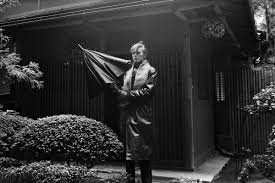
Showing posts with label David Bowie. Show all posts

Monday, 6 April 2026

The Predicament - William Boyd (2025)


Rating: Admirable

William Boyd is another writer with a connection to David Bowie, having co-engineered an infamous art hoax when they were both on the board of Modern Painters journal. Boyd wrote and Bowie published a book, Nat Tate: An American Artist 1928-1960 (1998) about a lost American artist called Nat Tate. Launched on April Fools day, both Bowie and Gore Vidal read excerpts and fooled the world, for a while at least. Boyd's current literary excursion is the second part of a trilogy (the first being Gabriel's Moon, published in 2024), featuring travel writer and reluctant spy, Gabriel Dax. Set in 1963 Dax is again called into action by his MI6 handler, the seductive Faith Green, whom Gabriel is romantically drawn to, despite his best, but ultimately pathetic efforts. Dax is a quintessential charming Englishman, who's general befuddlement regarding his circumstances remains despite being drawn ever further into the world of cold war espionage. He's posing as a double agent to reel in (attractive) KGB female agents and then he's sent to Guatemala to gain intel on a popular left-wing leader. Of course it all goes pear-shaped, but at least he makes some progress on his travel book about famous rivers. Later, in West Berlin, he's liaising with another (attractive) agent, and, of course, Faith Green, to head off a potential assassination attempt on John F Kennedy during his famous visit to West Berlin. This part of the book is convincingly rendered, with period flourishes bringing some authenticity to proceedings. 


Bowie and Boyd, April Fools tricksters


Boyd is a self professed fan of Graham Greene and despite mentioning in an interview that he believes that he is not channelling the author, I couldn't help but think of Greene when reading The Predicament. Greene split his works into more serious literary fiction and what he called his 'entertainments', light and humorous excursions aimed at the everyday reader. The Predicament definitely has a light tone and although Boyd's writing is sophisticated and erudite, it is an easy read, with the narrative moving along with an engaging pace, and yes, it is entertaining. Dax is a relatable character, convincingly out of his depth, yet plucky in his resolve to rise to the various challenges in his path. He has a tendency for self reflection and therefore does moan a bit, but fortunately he does see a therapist, an (attractive) Dr Haas, which provides some insight into his character and also some humour. The main problem, for me anyway, was that there was little tension generated throughout, even when Dax's life was in danger. There's some spy thriller action tropes that play out that are very well written, but the overall light tone means that there doesn't seem to be that much at stake. Still, the plot is good enough and there are some great satirical scenes that are also homages to the spy genre; Dax is schooled in tailing suspects by an amiable agent, who takes Dax on a merry chase, whilst also pausing to eat at every available opportunity. Dax is also given a lesson in self defence by an old hand, which comes across as a playful James Bond moment, without any gadgets, just good old fashioned practical advice. This was a book club read and about half of the members were impressed and rated The Predicament highly, whilst some others were less impressed, citing Dax's tendency for having a good old moan and the lack of palpable tension. Still, a fine novel that serves a particular purpose - to engage and entertain, and there's nothing wrong with that. 

Friday, 13 March 2026

The Black Album - Hanif Kureishi (1995)


Rating: Excellent

I've long been aware of Hanif Kureishi due to his association with David Bowie and the music he made as the soundtrack to the BBC adaptation of Kureishi's Buddha of Suburbia (1990). I've long had that novel sitting on my shelves, but I spied The Black Album at the fantastic second hand bookstore, Bella's Books, the kind of second hand book store that is crammed with books and goes on forever. I decided to read The Black Album now rather than sit on it for ages, and I'm pleased that I did. Published during the thick of an upsurge in youth culture in the mid nineties, Kureishi captures the beginnings of that era (1989) and expands on it by exploring ethnic identity in multicultural Britain, and religious tensions, in particular the fatwa on Salman Rushdie due to the publication of The Satanic Verses (1988). College student, Shahid Hasan, meets Riaz Al-Hussain on the first page, thus begins Shahid's entanglement with the forces of radicalisation that causes the somewhat youthfully naive Shahid to confront the cultural and religious forces swirling around him. Shahid is a convincing and compelling character, who is also a budding writer, which allows Kureishi to explore the literary struggles and pretensions of his craft, perhaps inspired by his own experiences studying at Bromley College of Technology in the 1970s. Shahid falls into a romantic relationship with one of his teachers, the inspirational Deedee Osgood, an older woman going through her own transitions. Their adventures together include taking ecstasy at raves and sex fuelled nights together whilst avoiding her politically principled semi-estranged husband. 

Bowie and Kureishi circa early 1990's

Shahid's life trajectory collides with his involvement with Riaz and his band of followers, including the intense former drug addict, Chad, who pull him into situations that are diametrically opposite to those with Osgood. In-between them stands Shahid's brother, Chilli, who is buckling under the pressures of being caught between the pleasures on offer in London and the demands of family life, of which he's trying to escape; he's a deeply flawed, yet sympathetic character. Kureishi cleverly uses Chilli's and Shahid's double lives to explore the tensions between the temptations of secular life in the heart of the decadent West and the supposedly pious life of religious extremism. The two worlds end up clashing towards the end of the novel in spectacular fashion. The novel is rich in both action and discourse, with multiple themes intertwining. The Black Album is sophisticated literary fiction that engages both the brain and the emotions. On the evidence of this novel Kureishi is a superb writer, different to Rushdie, whom is name-checked throughout the novel, yet definitely up in the same literary category as the author who famously suffered under the threat of the fatwa. Kureishi unfortunately has his own torments, having become a tetraplegic from a fall in Rome in 2022.  Fortunately he is still producing work, via the memoir, Shattered (2024), and recently he appeared in the latest Bowie documentary The Final Act (2025). I'll be definitely reading more of his work, and god speed Hanif Kureishi, I wish you well.

Saturday, 10 January 2026

2025 Reading Round-Up


Ten years since Bowie died

Last year was a curious year, with 90% of my books packed away in piles of boxes while our new house was being built. I kept a select few out, ready to read, but, of course, quickly added to that number via digs in second hand bookstores in Perth and Melbourne and in op shops in Subiaco. This situation led to me reading one of my many long-held books, A Landing on the Sun (1991) by Michael Frayn, which I deliberately left out of the boxes in order to finally read it, and I’m pleased that I did. This novel didn’t end up as the best book of the year, however, that honour goes to what is considered to be a perfect novel, Stoner (1965) by John Williams. A beautiful, brilliant novel that everyone should read. Another great discovery was Paul Auster, an author I had long known about, but it took finding Leviathan (1992) in an op-shop for me to finally read him. Once again, thoroughly recommended. I also managed make progress in my Martin Amis project, with Money (1984) coming close to being my book of the year, and the short story collection, Einstein’s Monsters (1987) being a worthy read. I finally got around to reading one of the classics I’d long wanted to read, Childhood’s End (1953) by the great Arthur C. Clarke, which didn’t disappoint. City (1952) by Clifford D. Simak also falls under that classification.


Stoner - book of the year

It was great year for reading generally, with some great books resulting from the library book club; Our Evenings (2024) by Alan Hollinghurst, There are Rivers in the Sky (2024) by Elif Shafak and Stoner being notable examples. As aways there were some lesser books, with Dark Magus (2006) by Gregory Davis being the worst, a poorly written account of being Miles Davis oldest son, which was fascinating, but hamstrung by repetition and cliché. Stars in my Pocket like Grains of Sand (1984) by the eccentrically brilliant Samual R. Delany was a mild disappointment; it was complex and unique, but ultimately a bit pedestrian. Still, I’m pleased to have read it and the same can be said for many of the others I read in the last year, an adventure as always. This year promises a better organised personal library when I unpack all of my books and organise more shelving, you can’t just have piles of books balanced against walls in the corner of the room in a new house can you? Who knows what literary adventures await…?


Addenda: So, why a picture of Bowie on this post? Well, it's the ten year anniversary of his passing - 10th January 2016, he was a renowned lover of books and literature, a great lyricist and cultural mavin. Besides, I read a Bowie book this past year, We Could Be...Bowie and his Heroes (2021) by Tom Hagler, so that makes it legit!


Sunday, 9 November 2025

We Could Be...Bowie and His Heroes - Tom Hagler (2021)


Rating: Admirable

I find it hard to resist a good Bowie book and when We Could Be...was returned across the counter at my library I, predictably, took it home. Since Bowie died, now approaching ten years ago, there have been a multitude of Bowie books, all with their own angles in an attempt to get away from just a straight Bowie biography. This one collates an array of meetings that Bowie had with other significant people in the public sphere, in music, film, art, fashion and politics. It is arranged chronologically, starting with Absolute Beginner: 1947-1969 and ending with The Next Days: 2005-2016. For a hard-core Bowie fan like me the early years were the most interesting, for example I never knew that Bowie hung out with Brian Jones during the Rolling Stone's early years; that Bowie, as Davy Jones, was invited into Paul McCartney's home and they listened to an acetate of one of Bowie's songs; or that Ridley Scott directed the ad for 'Luv ice lollies' that featured Bowie in 1969. As the eras roll on the anecdotes become more familiar, although there are still many nuggets of unknown incidents to be found. The writing style is fairly informal, but good enough to carry the stories of Bowie's interesting meetings with other well known people. There's a smattering of photographs, most well known, among a few that are relatively unseen. Over all it is a handsome, well presented Bowie book.

Bowie and Visconti, circa 1979, getting their facts straight

Tony Visconti, Bowie's friend and significant producer throughout his career, is noted on the cover as being a 'consultant editor'. Apparently, as indicated in the introduction, Hagler managed to get an early draft to Visconti to read and he offered insights and corrections, saying that his input was based on what Bowie had told him directly. This does seem to give particular credence to the veracity of the stories, however, I was disappointed to note some oversights. I know it comes across as churlish to point out mistakes, but in a book like this it has the effect of the reader not being as trusting when it comes to some of the less well known encounters. Firstly, there's the account of the reasonably well known meeting in which Bowie mistook Doug Yule for Lou Reed when he attended a Velvet Underground gig in New York in 1971 (Reed had left the band by that stage). It's a humorous, and true story, however Hagler notes that it was supposedly John Cale who answered the stage door and let Bowie inside. John Cale had long left the band (in late 1968), with Doug Yule becoming his replacement. Cale was certainly not in a version of The Velvet Underground that didn't include Lou Reed. Strangely there is then no mention of Bowie meeting and hanging out with John Cale later in the book, in particular in New York, where he and Cale jammed together, something documented on some rather dodgy bootlegs. It's an odd oversight in the context of the thematic thrust of the book. Another error comes later, regarding Nagisa Oshima, who made the film Merry Christmas Mr Lawrence (1983); when shopping around for an actor to play a British POW he saw Bowie in an TV ad for Pepsi, also starring Tina Turner. Except unfortunately this ad didn't appear until 1987, when Bowie advertised Pepsi in a deal to help with the expenses of touring the Glass Spider Tour. I think the actual ad the director would have seen Bowie in was one he did in the early eighties for a brand of Japanese sake, which featured the amazing instrumental Crystal Japan (1980), but not Tina Turner. Finally, in the section covering the 1990s, Hagler notes that Bowie had written the song I'm Afraid of Americans (1995) with Trent Reznor, but the co-writer was Brian Eno. Reznor did a remix or two of the song, toured with Bowie and starred in the video, but there was no co-write. Now I feel really churlish! But, despite being a fine book, these oversights, as a hard core Bowie fan, mean that I question other stories that I've never encountered before, despite Visconti's involvement. Despite this the book is worth a read for Bowie fans overall, regardless of my nit-picking.

A Personal Epilogue

We Could Be... is all about Bowie encounters and what it was like for himself and the significant others he met throughout his life. As a fan I had my own encounter in 1987 in Sydney, where I attended four of the eight Glass Spider shows. I was hanging around the entertainment centre and walked past an area near the backstage. There was a cyclone fence running between the back of the centre and a multi-story car-park. A few people were hanging about and one told me that they knew that Bowie was going to arrive for a sound-check shortly. He did indeed, and the experience of meeting him was surreal. He stood about 30 centimetres away from me on the other side of the fence, wearing a black fedora hat and a suit. He signed a page from a book I'd managed to convince someone to rip out of a Bowie book they had with them (I had nothing with me). I can't remember what I said to him, nor what he said to me, but I remember that it evoked a feeling like you get from having a beer on an empty stomach. I also remember that he was friendly and polite, totally relaxed and his skin was so white that it was almost translucent. It was a thrill to meet him and still feels surreal today, like it happened in another realm, despite the physical evidence of the signed page hanging in a frame on my wall. A great experience - I was among those who met Bowie and I'll always treasure it. That day I also met Carlos Alomar, one of Bowie's great and important collaborators, having played guitar on countless Bowie classics. Now he was a dude, exuding lots of fun and enthusiasm as he jumped around in his black leather stage attire. A great day all round.


Tuesday, 23 January 2024

David Bowie: Rock 'N' Roll With Me - A Memoir - Geoff McCormack (2023)


Rating: Excellent

Imagine growing up as a close friend of a man who would become the most influential rock star ever, well Geoff McCormack was lucky enough to be a close friend to David Bowie for most of his life. Luckier still McCormack had some talent as a singer and percussionist, which gave Bowie the opportunity to invite him along on tours as both a buddy and a band member. For this reason core Bowie fans have long known about McCormack and this makes the book a welcome edition to the huge amount of Bowie books out there, rather than just yet another product of the Bowie economy. Originally published quite a number of years ago in a deluxe, autographed edition, this is one for the masses. Essentially McCormack's memoir, from childhood to now, Rock 'N' Roll With Me comes across with lots of charm, but not as much detail as one would think, at least in terms of the professional workings of Bowie and his music. The book reads more like a travelogue, more impressionistic than detailed oriented. However the content is still fascinating and unique, with plenty of great stories about travelling with Bowie, being a touring musician and having lots of fun along side the great man. Although McCormack was, as mentioned, lucky enough to both work with Bowie and be his close friend, you come away with the impression that Bowie was actually the lucky one, with McCormack being a very good friend indeed.


Bowie and McCormack in Russia


Perhaps the main draw of Rock 'N' Roll With Me is the amazing array of photos taken by McCormack himself, having taken up photography in parallel with traveling with Bowie. There's many not seen before, taken while traveling through the former Soviet Union via the Trans-Siberian Express, on several American tours, the making of The Man Who Fell to Earth (1975) and the Station to Station (1976) album. McCormack is a natural when it comes to photography, the photos are not merely snapshots, but are professionally executed. Bowie and McCormack remained friends until Bowie's untimely death in 2016, so there's chapters about Bowie and Iman's wedding, Bowie's fiftieth birthday gig at Madison Square Garden in 1997, hanging out at Bowie's apartment in New York with he likes of Lou Reed; and finally, an account of their last communications, which is both touching and sad. The book ends with an afterward written by Bowie in 2007, during a period when he had mostly retired from public view, in which he asks "Will you actually be able to get this stuff published do you think?". For Bowie fans Rock 'N' Roll With Me is an essential book and it is presented beautifully in a hard-back format with quality photographic reproductions. 


From the Station to Station sessions


Monday, 24 January 2022

David Bowie: A Life - Dylan Jones (2017)


Rating: Excellent

I've read so many biographical Bowie books in the past that I never thought I'd read another one again, however when A Life was published in the year after Bowie's death I kept on reading parts of it each time I went to the book store. I resisted buying it, but then I saw it about six months ago in a second hand book store for only ten dollars, and so here I am. The reason why I bought and read it in the end is because of its unique (among Bowie books) lay-out in which people that knew Bowie in all kinds of capacities talk about him in terms of their personal experiences. What makes this book fascinating is the range of people involved that you don't normally find in Bowie books, there's childhood friends, collaborators, musicians bloggers, journalists, novelists, designers, artists, actors and even a palliative care doctor. This disparate bunch of people give a really interesting perspective into Bowie and his life. Also, refreshingly, A Life does not deal that much with his music, rather the primary focus is on Bowie as a person and on how he went about his business. As a long time Bowie fan who knows a great deal about the man and his music there was a great deal to discover. It was a total pleasure to read. A Life is set out chronologically in time, and is broken up into discreet periods, which worked well. Some may find it a bit repetitive and the other 'flaw' is that there are no photographs, but these are minor matters. If you are a Bowie fan I advise you to read this book.

In keeping with the theme of A Life I thought I'd write about my relationship with Bowie. I was born in 1969 and by 1979 I had become aware of Bowie, but did not become a fan until my sister took me to see him in concert in 1983. I was amazed, enthralled, and started buying his back catalogue. As a typical alienated angsty teenager Bowie was just what I needed. In A Life it is pointed out that Bowie was able to project himself in a way that appeared to be speaking directly to the individual, that you could recognise something about what you were going through in your life and feel that you were understood. In this way he became a kind of friend to me, someone you could turn to when things weren't great. I could put on the Diamond Dogs (1974) album, for example, which was filled with obscure lyrical references and dark themes, and feel like it spoke directly to me. Added to this was his musical brilliance, his predilection for fascinating cultural references and his striking individuality. I was lucky enough to meet Bowie in 1987 at the back of the Sydney Entertainment Centre. I spoke to him briefly and got his autograph. It was a bizarre experience, like I had drunk a few beers on an empty stomach. I'll never forget it. That bonus one on one experience with Bowie was certainly great, but really what I am grateful for is that Bowie gave me a lifetime of both musical and intellectual stimulation and a strong personal connection that ultimately is distinctly humanist. So thank you, Mr David Bowie.

Monday, 27 September 2021

David Bowie by Sukita - Masayoshi Sukita (2021)


Rating: Excellent

This superb book was bought for me by my fiancé for my birthday earlier in the month. Having been a massive Bowie fan since my teens it was an obvious choice. Sukita, from the early nineteen-seventies, took some of the most significant and famous photographs of Bowie. This book contains many photographs that I'd seen in the past, but that I was not aware Sukita had been involved with, so as I went through this beautiful book I was taken by surprise numerous times, which added to the pleasure. There's also some rare photographs included that I'd never seen before. The most famous photograph Sukita took was the one that ended up being used for the 'Heroes' (1977) album, however I had always loved the other photos from this session - in black and white, with Bowie in a leather jacket looking angsty and intense, revelling in his mid 1970's pomp. Fortunately many of the photographs from this session, which actually took place in Japan, despite the album being so associated with Berlin, are included here.


My favourite photo from the book. By Sukita


Sukita's most famous photograph of Bowie

I could write a significant amount of words regarding this book, however, in the end, I'd be merely gushing. One definite thing I will say is that all Bowie fans should have this book in their collection. The photographic reproductions are of a high quality. Sukita provides the text, which is obviously translated and displays a certain charming sensibility of a non-English speaker, who is also very respectful of both Bowie and the work they did together. This becomes very poignant toward the end of the book when, in 2009, Sukita took his last shots of Bowie when he was visiting New York, only one of which is reproduced here. Perhaps this is the only criticism of this book, that it could have been much bigger, with many more photographs, particularly as Sukita worked with Bowie at many different points during his career. However, like Bowie himself, Sukita comes across as someone concerned with quality control, which is totally fair enough. Reading this coffee-table, hard-back book has inspired me to look much more closely at many of these types of publications I have in my collection. In the past I've merely leafed through them, but now I'm going to read them from front to back, so expect more to appear on this blog in the future, including some more about Bowie and other of my musical obsessions.

Not quite that famous photo. By Sukita

Bowie by Sukita


Monday, 27 July 2020

Querelle of Brest - Jean Genet (1947)


Rating: Excellent

I've long known about Jean Genet by reputation, but initially through Bowie's sneaky play on his name for the 1973 song The Jean Gene. I found a copy of Querelle of Best in WA's Mostly Books about five years ago when it was closing down. I was amazed at the time as it was the only Genet book I'd ever seen around. I didn't really know what to expect, but such was the quality of Genet's prose within the first few pages I felt more than willing to be be immersed in the seedy sailor world of Querelle. Ah yes, Querelle - a young sailor (matelot) full of raw sexual swagger, ranging about in the fog shrouded harbour town of Brest in the south-west of France. Querelle is somewhat of a sociopath, robbing, killing and taking advantage of those around him. He also just happens to be gay and most of the sex in this novel is of the homosexual kind; some of it is quite explicit, but some is merely implied. If Querelle of Brest were published today it would still be regarded as shocking, but not necessarily due to to the homosexual sex scenes (although they'd still shock some people, but then they wouldn't be reading Genet in the first place really), rather it would be for the extreme psychologies of Querelle and many of the other characters. There's not a great deal of love in this novel, rather human relations are presented as sadomasochistic and desperate. Coupled with Genet's unyieldingly rigorous prose style, this makes for compelling reading.

Genet was certainly a great writer, although style-wise barely any authors write with such florid and knowing prose any more. No doubt the likes of Bukowski would have hated Genet's style, being the opposite of his pared back existential prose. The novel flirts with postmodernism, with its slightly hyperreal tone, fragmented form (although subtly) and Genet's meta authorial interjections; even suggesting toward the end of the narrative that Querelle had being getting up to things that were unknown even to the author. Since finishing the novel I've read that one of Genet's main themes in his work over-all was the struggle for identity. Many of the characters in the novel, including Querelle himself, are in a state of psychological flux, and as such the homosexual elements throughout the novel are actually secondary to the exploration of the human psyche. However this would not stop many people from being perturbed by some of the scenes in the novel and I had to be a bit careful reading it on the train lest someone read over my shoulder, receiving an early morning shock to their conservative senses. Still, I'm sure Genet would have enjoyed the thought of one of his novels' still causing consternation seventy or so years after publication.


Friday, 10 July 2020

Ziggyology: A Brief History of Ziggy Stardust - Simon Goddard (2013)


Rating: Reprehensible

Although literature is a key passion in my life, music does take precedence and Bowie is my main-man (excuse the pun, fellow Bowie fans...). I approached Ziggyology with optimism due to its rather unique premise of exploring the cultural influences brought to bear on Ziggy as a concept and as a character unto himself. It is well known that Bowie readily acknowledged that Ziggy took over his persona at times during the height of Bowie's ascension to stardom. Instead what I read bitterly disappointed me in almost every way. Ziggyology is unfortunately a totally wasted opportunity, as it does not provide serious Bowie fans with anything particularly new regarding Bowie's Ziggy Stardust period and also it fumbles its attempts at presenting an alternate view.

Goddard's attempt at a different take on a familiar story, with a long initial synopsis of the varied cultural influences brought to bear on both Bowie (and therefore Ziggy) and his generation, including Beethoven, H G Wells, Japanese kabuki theatre, the BBC show Quatermass (circa 1950s), Vince Taylor and the Stanley Kubrick films A Clockwork Orange (1971) and 2001: A Space Odyssey (1968), is squandered by a quasi academic style that renders any real insights as superficial. Goddard could have provided a serious account of such cultural influences, but instead it reads like a rush-job to endure before you get to the juicy bits about Bowie and Ziggy. The fascinating cultural influences are indeed there, but who really cares? The second great sin is Goddard's flawed approach at examining Bowie's psychological state during the period he evolved the idea of Ziggy and, more significantly, the intense effects it had on his psyche once things really got going. A potentially decent stab at this is marred by scenes in which Goddard depicts Bowie as locking himself in a bathroom at his twenty-fifth birthday party, looking at himself in the mirror and saying "What's it going to be, eh?" A number of times he also depicts Bowie as thinking to himself that "It takes a lot to pretend to be someone else...' Such an insight! This trite approach is unfortunate when a far more interesting and reasonably obscure influence on Bowie regarding the human psyche and concepts of self was Ronald Laing's book, The Divided Self (1960), in which Laing attempts to make madness comprehensible, by, in part, examining personal alienation and the invention of other 'false selves'. This would have been far more interesting than the pop psychology and potted family history presented.

Other aspects of Ziggyology also rankle, such as Goddard's 'aren't I a clever lad' writing style, which grates more and more the longer the book goes on. Even worst is the fact that Goddard is continually putting words in the mouth of Bowie. Unless these words are taken from interviews (some could be, but I didn't recognise any of them), then such a technique can't help but be a dodgy business. Goddard also regularly counters and compares Bowie's career with that of Marc Bolan's (T-Rex), which is fair enough, as they were both friends and rivals, however Goddard increasingly paints Bolan in a negative light beyond a reasonable level and he comes across as being extremely catty in the process. It is known that Bolan certainly had his moments, but there's no need to denigrate him to make Bowie look better. Frankly Ziggyology would have been better as graphic novel, as it's tone and treatment of Ziggy Stardust suits that medium better. Recently one has a appeared and even though I've just looked at it in a book shop I enjoyed that experience far more than reading this paltry attempt at depicting the arrival of Ziggy Stardust and the impact it had on Bowie's career.


Monday, 17 June 2019

Asymmetry - Lisa Halliday (2018)

Rating: Excellent

There's a scene right at the end of David Bowie's twenty minute video Jazzin' for Blue Jean (1984) where Bowie's rock star character, Screaming Lord Byron, leaves with Bowie's every-man character's female interest (Bowie plays both characters). Every-man Bowie engages in a tirade against the retreating rock star and then breaks character and talks to the director (Julian Temple) and production crew about how the scene should be re-shot. Bowie and Temple then argue about the merits of being 'clever clever'. Asymmetry is just like Bowie and Temple's postmodern take on the music video; it is 'clever clever' and perhaps a bit too clever for its own good. It also uses most of the typical postmodern techniques that have become all too familiar and therefore a bit stale. The novel is arranged into three seemingly disparate sections - Folly, Madness and Desert Island Discs, yet they are connected by a series of clues. There are innumerable allusions to writers and novels and the female protagonist in Folly is called Alice and she does indeed descend down the rabbit hole into a relationship with a much older man, a writer called Blazer, whom is based on Philip Roth, whom Halliday had a relationship with when she was in her twenties. I could go on...(but I only write two paragraphs these days...)

I completed Asymmetry with feelings of ambivalence, cynicism even; however I had to admit to myself in the end that the novel was quite an achievement. The writing is tightly focused, littered with beautiful imagery and manages to be both playful and profound, in particular during the middle section written from the perspective of Amar, an Iraqi/American citizen held for questioning at Heathrow airport in the early 1990s. Amar's character is nicely rounded, but more significantly he becomes a mouth-piece that enables Halliday to talk about political issues whilst at the same time acknowledging how talking about political issues in literature is fraught with pointlessness and pomposity - now that's clever clever. Halliday manages to pack a lot of thematic juice into what is a refreshingly short novel. She covers relationships, aging, the anxiety of influence, the role of literature in culture and the existential difficulty of finding a meaningful path through life. Asymmetry may annoy you, frustrate you, but in the end it's worth the effort and indicates that just maybe there is life left in postmodernism after all.

Monday, 18 January 2016

Kwaidan: Stories and Studies of Strange Things - Lafcadio Hearn (1903)


A copy of this intriguing book was given to me as a secret santa present about four years ago (by my oldest brother I strongly suspect). It had been on my mind for a while so I decided to finally read it. I’m glad I did because this charmingly idiosyncratic book was a source of great fascination and entertainment. Written by Greek born Lafcadio Hearn during the last years of his life living in Japan, Kwaidan is a collection of Japanese supernatural folk tales, many of which are centuries old. Hearn traveled to Japan in 1890 to work as a newspaper correspondent but soon abandoned journalism for teaching, which eventually led to teaching english literature at the Tokyo Imperial University. Along the way he married and became a naturalized Japanese citizen. Unfortunately he died at the relatively young age of 53 from a heart attack. I wonder if he haunted anyone?

The collection opens with one of its best stories, The Story of Mimi-Nashi-Hoichi. This story was somehow familiar to me, although that didn’t stop it from being creepy. Set seven hundred years in Japan’s past it recalls the tale of a blind monk called Hoichi, whom was proficient with the biwa instrument, and his encounter with the ghosts of the Heike clan who had perished in a famous battle. Hoiche is tricked into playing the biwa for the ghosts deep in the forest at night and has to be saved by his masters who come up with a workable but flawed plan. Like many of the stories in the collection the narrative style is sparse yet evocative; the scenes described come to life with an unnerving clarity. Many of the stories are no more than a few pages long, such as Diplomacy. Diplomacy is a simple tale of a Samuri who cleverly tricks the man he is about to execute so he will not return as a ghost to take his revenge. Reading stories like these made me realize just how steeped Japanese culture is in ghost stories and other bizarre supernatural phenomena. It is no wonder they make such disturbing horror movies such as Ringu (1998). In fact four of these stories were made into a critically acclaimed film called Kwaidan in 1964.

Perhaps the best story here is Rokuro-Kubi. A Samuri named Isogai Heidazaemon travels through an isolated mountainous area. Deciding to settle down to sleep for the night a woodcutter happens upon him and warns him that he’s in a dangerous area and offers him shelter for the night. Little does the Samuri know that he’s being tricked and the woodcutter is a Rokuro-Kubi, a being whose head detaches from its body to rampage through the night. The Rokuro-Kubi heads plan to eat him while he sleeps, but Isogai has other ideas. This story is disturbing but at the same time reminded me of the giant slapstick heads in the classic Hayao Miyazaki film Spirited Away (2001). No doubt there are many references to centuries old supernatural tales in many of the brilliant Studio Ghibli films.

It’s a pity that this collection did not end with Horai, a story about a place where the atmosphere is made up of ghosts and the people never grow old (where did the ghosts come from then?). Instead Hearn ends by including some of his own studies of butterflies, mosquitoes and ants and their cultural significance in Japan. These pieces are moderately interesting but after the ghostly atmospheres of the preceding stories my interest began to wane and the book ended on a low note. Despite this flaw Kwaidan’s supernatural charms were enough to make this collection memorable and it has reignited my interest in Japanese literature. Many years ago my brother lent me a number of books by Japanese authors, many of which I enjoyed immensely. Lately I’ve bought a few books by Yukio Mishema, which coincidentally was one of David Bowie’s favourite authors. I’ll have to read them sooner rather than later, along with Murakami’s last novel Colorless Tsukuru Tazaki and His Years of Pilgrimage (2013). Maybe on a long flight to Japan? Who knows....

Monday, 11 January 2016

The Death of David Bowie


It’s strange, even though in the last couple of days I was thinking about Bowie’s mortality, I never thought that it would happen, as absurd as that sounds. I was thinking, “Well I hope he lives at least another decade, just think what else he could do.” He’s always been there for me, an inspiration, a connection with the strange and the brilliant; he shone like no other and most of all he was my friend. Bowie really was the all round entertainer - he had something for everyone and for every mood and every situation. In times of trouble you could whack that certain Bowie album on and it would help get you through. As someone once said, he was bullshit and totally genuine at the same time; he had artifice but he also had a deep soul and could articulate something universal that we could all connect with.

I loved everything about Bowie, his music, of course, but also his intellect, his artistry, his poise and grace; his darkness and his melodrama and pretense. He had it all and even his artistic failures were fascinating. He went out on the edge and sometimes he would fail, but that was ok, he could always charm his way out. It’s hard to fathom that I’ll never see another up to date picture of Bowie, to be able to wonder what he is up to and what amazing moves he could pull next. He really was a genius and I’ll love him forever. Thanks David, thanks for all the times I listened to one of your records and was transformed, thanks for all the gigs and for just being you. You gave it your all. Goodbye.

Friday, 25 April 2014

I’m Still the Greatest Says Johnny Angelo - Nik Cohn (1967)


Nik Cohn is a British music journalist and author of Awopbopaloobop Alopbamboom: The Golden Age of Rock (1970), which is considered to be one is the first serious works of rock journalism and is also included in David Bowie’s list of his hundred favourite books. I’m Still the Greatest Says Johnny Angelo is Cohn’s first published work and is the fantastic story of street urchin Johnny Angelo’s seduction by early rock ‘n’ roll. The novella is a wild fast paced allegory about the cultural impact of rock ‘n’ roll and in many ways perfectly captures the primal energy of rock music.

In the beginning Johnny Angelo is a typical unloved youth and from the age of four indulges in escapist behavior, initially by dressing up in a red suit and parading back and forth, like a showman, on top of a wall. The adults are outraged, of course, and so begins his flight from the grimy reality of post-war Britain. By the age of six Johnny is a petty thief, stealing watches from the markets, and before the age of ten he meets a mysterious William Burroughs type character called the Doctor (no, not that Doctor). The Doctor becomes a mentor, spinning fantastic stories whilst grinning through yellow teeth. The Doctor also possesses a honeypot of crystals that ‘makes flowers blossom’ in his brain. Like much of the symbolism throughout the novella, the Doctor and his honeypot of crystals is partly self evident and partly nebulous.

Their unlikely friendship comes across as a changing of the generational guard and it is significant that the Doctor remarks to Johnny ‘Doesn’t truth get tiresome? When lies are so much fun.’ Such advice gives credence to the notion that this novella did indeed influence David Bowie, who only five years later would invent himself as a rock star in the form of alter-ego Ziggy Stardust. The novella is a rock ‘n’ roll fantasia, complete with bikes revving endlessly in the streets, the flowering of youthful rebellion, hero worship and street-wise fashion. Significantly by the age of fifteen Johnny both leaves home and hears and sees through a scopitone Little Richard singing Tutti Frutti. His mind is suitably blown. 

I’m Still the Greatest Says Johnny Angelo manages to both capture the impact of early rock ‘n’ roll and to also predict its future. Johnny’s fuck you attitude, his gang of bikers and his posing finds Johnny rooted in the early rock ‘n’ roll moment, but his violently riotous live shows complete with wild animals (a metaphor for the energy of rock ‘n’ roll?) and freaky circus performers point toward the future of glam rock theatre and the nihilism of punk only nine years later. There’s an interview with Johnny that comes across like the infamous interviews Lou Reed gave in the 1970’s, full of casual deadpan distain. Johnny lives for the moment, the moment of danger and release that is the rock ’n’ roll concert. This is both his making, and true to rock ‘n’ roll mythos, his undoing as well.

I’m Still the Greatest Says Johnny Angelo also tells the story of the establishment’s knee jerk reaction to rock ‘n’ roll and how that contributed to the fatalistic hubris of rock stardom. Hounded by the establishment and holed up with his followers, Johnny’s endgame is one of futility and egotism. With amazing prescience Johnny’s story ends at the age of 27; that mythic and tragic age that would later claim Jimi Hendrix, Janis Joplin, Brian Jones and then Kurt Cobain decades later. My copy of the novella was published in 1970, tempting me to think that perhaps Cohn tinkered with Johnny’s age for the reissue, because by the end of that year Hendrix, Joplin and Jones were all dead. Either way I’m Still the Greatest Says Johnny Angelo is a recommended read for anyone interested in the rock ‘n’roll mythos and the evolution of rock writing in general.