Monday, 6 September 2021

Lyonesse II: The Green Pearl - Jack Vance (1986)


Rating: Excellent

Jack Vance was such a superb writer, his prose is just so vivid and classy that even though The Green Pearl is not quite up to the quality of the first book in the Lyonesse trilogy, Suldrun's Garden (1983), it is still an immensely satisfying read. The Green Pearl follows the adventures of many of the characters from the first book, particularly Aillas, who is now the king of the southern island of the Elder Isles, Troicinet. Although the novel begins with the sinister movements of the evil green pearl, which appeared at the end of the first novel, a great deal of the narrative follows Aillas' political and military adventures. Whilst the magical forest of Tantrevalles featured strongly as a setting in the first book, here it is the barren and mountainous region of Ulfland that dominates. Aillas battles the Viking-like Ska, who have declared themselves at war with the rest of the world and occupy much of Ulfland. Aillas' wizard ally, Shimrod, appears again and gets caught up in attempting to satisfy his carnal desires with the mysterious Melancthe, who comes across, somewhat humorously, as a parody of a goth (as in goths from the late 70's music scene...).This is just some of the colourful adventure and political intrigue featured as the novel steadily builds its narrative arc.

Cover art from another edition

Once again Vance sends his protagonists on long adventures during which they face dangers both of the practical and the magical kind. It's entertaining stuff and I would imagine that this narrative form was aimed at players of Dungeons and Dragons, who would have been strongly drawn to many of the tropes featured  throughout the novel. My favourite part of The Green Pearl comes towards the end, when the beautiful princess, Glyneth, is kidnapped by the obnoxious Visbhume, a somewhat mediocre wizard, and is taken to the parallel world of Tanjecterly, where humans can live, but are threatened by all kinds of monstrous creatures. This section is wildly imaginative and exciting, with Glyneth going against type as a helpless princess, taking things into her own hands. The Green Pearl has much to recommend, including characters with depth and dialogue that sparkles with verve and complexity. The world-building is sophisticated and features an array of characters with brilliant names and unusual characteristics. As far as trilogies go, The Green Pearl is typical in that although it features a multitude of narrative pleasures, it does come across as a bridging novel, and therefore suffers slightly as a consequence. However, from what I've heard from those in the know the third novel, Madouc (1989), is a fine end to the trilogy, so I'm looking forward to reading that in the near future.

Monday, 23 August 2021

Klara and the Sun - Kazuo Ishiguro (2021)


Rating: Admirable

I'm in two minds about Klara and the Sun. Ishiguro has produced a fine novel, his first since winning the Nobel Prize for Literature in 2017, and the breadth of his ambition is to be admired, with some intriguing themes dealt with in a subtle and intelligent manner, however I did not actually enjoy the novel particularly. Klara and the Sun is another stab at 'literary science fiction', in a similar vein to Never Let Me Go (2005), as has been noted by some critics, which is a reasonable summation, although to be fair to Ishiguro there are some fairly significant differences. The eponymous protagonist is an AF (artificial friend), an AI humanoid android, who is purchased by the mother of fourteen year old Josie to keep her from being lonely while she spends her days isolated, learning online and being afflicted by a mysterious illness. The illness, once you come to understand its nature, is not so mysterious and is one of the more morally ambiguous themes explored in the novel. Klara is a very capable AF, both intelligent and benign, but also surprisingly naive. Although as the novel progresses you learn just how society has been negatively transformed by humanoid AI androids, Klara herself is shown to be nothing but kind to those around her, in fact she is much more caring than the stressed out and fickle humans. The human characters are mostly average people living in what appears to be a radically altered culture, although the reader is never privy to the mechanisms behind these changes, they are only hinted at. The majority of the human characters are merely the end users of these radical technologies, trying to cope with the moral and practical challenges they present. 

Although Klara is a fascinating protagonist, the fact that the story is related from her point of view means that the novel has an almost flat one dimensional tone that does not easily allow narrative tension to build. Klara's narrative voice is predominately observational in nature, so that often the novel is weighed down by excessive descriptions of what the characters are doing, how they are relating to each other and why they are doing the things they are doing. A trip in the car becomes a tedious affair due to the fact that Klara relates every single thing about it. I often found myself speed reading or skipping ahead to more significant portions of the narrative, which is always an unfortunate outcome for the reader. The novel is also imbued with a melancholic tone and a feeling of quiet desperation on the part of the human characters. Sometimes there is an ominous, bordering on disturbing aspect to some of the more curious parts of the novel, however it occurred to me that Klara and the Sun is like a 'light' version of a J G Ballard novel, relatively unsettling, but ultimately not unsettling enough, which is a shame really, as there are important themes at play that could have made a greater impact if the narrative had been more dynamic.

As a postscript yesterday I facilitated the last of three library book club session to discuss this novel and the groups were roughly split into thirds, with one third loving the novel, another third opining that it is a failure and the final third being somewhere in-between, which is where I stood. It's certainly a divisive novel, which, as is often the case, led to in depth discussions and quite a few people coming away with a greater appreciation of the novel's finer points. I came away from these discussions thinking that, despite its flaws, Klara and the Sun is a subtle and thematically sophisticated novel. It makes me wonder how the novel will be regarded in, say, ten years time. As an important novel? Or as an underrated cult classic? Given Ishiguro's status it will probably not fade away and perhaps it will glow more brightly in its afterlife. Part of me kind of hopes so...


Sunday, 8 August 2021

Death's End - Cixin Liu (2010) Translated by Ken Liu (2016)


Rating: Sublime

Death's End, the third book of the Remembrance of Earth's Past trilogy, is a remarkable science fiction novel, perhaps the greatest one I've ever read, and certainly the best closing novel of a trilogy I've ever read. I've never encountered a science fiction novel quite like Death's End. The manner in which Liu spins his tale is just beguiling, endlessly fascinating and compelling. The narrative is logical and precise, despite being six hundred pages long. Nothing is wasted, everything is connected and the narrative thrills are astounding. What is truly remarkable is that Liu takes his time, never giving in to any notion of satisfying the reader's narrative greed; back stories are given space to breath and when the narrative is jolted forward by a revelation or plot development it comes across as a totally natural development of what came before, even though you didn't see it coming. Death's End encompasses an enormous time frame, beginning during the twentieth century 'Common Era' of the first novel, The Three Body Problem (2008), and through the 'Crisis and Deterrence Eras' of the second novel, The Dark Forest (2008); and then through the 'Post-Deterrence Era' and five other eras before ending some eighteen billion years later! What occurs in-between is just a stunning and unique exploration of humanity's struggle to survive in a dark universe (and I mean bleakly dark). 

Cixin Liu - science fiction genius

One of Cixin Liu's most impressive achievements is the application of the laws of physics and cosmology taken to their most extreme and logical end points. The highlights of this approach are numerous and unfortunately hard to talk about lest I reveal too much. However it's probably safe to mention the sections that involve humans encountering and exploring four dimensional space. The manner in which Liu uses four dimensional space as both a brilliant plot device and as a way to just blow your mind is incredible. This is just one example of the many times I actually exclaimed out loud "Wow!". It does help to know something about physics, such as theoretical eleven dimensional space, quantum mechanics, black holes and relativity, so if you can brush-up before reading it will greatly enhance your enjoyment. To contrast this (although it is connected with physics), Liu also includes three fairy-tales that are brilliant in their own right, in particular in the clever way they are connected with the main narrative. As for the writing, although not exceptional, Liu's style is more than adequate, and compared to the first two books is quite often poetic and beautiful. The characters, which sometimes came across as merely vessels to help tell the story in the first two books, are more well rounded here. Unusually for me I've indulged in some hyperbole in this brief review ( I could easily write an essay), but I have to say there's no other way to get across just how good this novel is. If you are fan of science fiction you have to read it, but you'll have to read the first two books first! Fortunately both are excellent in their own right, but Death's End is the amazing reward that closes out an incredible imaginative exploration of what the universe could well be like (but let's hope not!).

Sunday, 25 July 2021

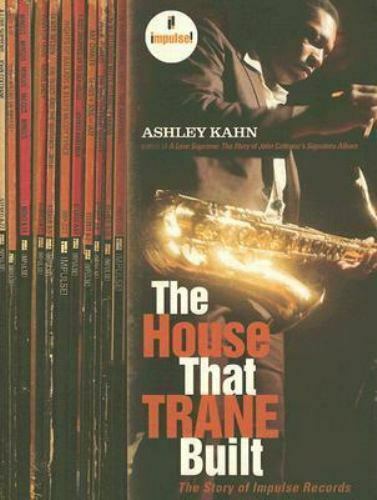
The House That Trane Built: The Story of Impulse Records - Ashley Kahn (2006)


Rating: Excellent

A week ago I was remarking to my friend, Owen, who lent me this book, that jazz is the greatest music genre because it is endlessly complex, filled to the brim with amazing practitioners and has something for everyone, from soft, slow cool jazz to freaky skronky spiritual jazz. He didn't disagree. Impulse Records was, and, once again, is, one of the most important and influential jazz labels. The House That Trane Built is a fine book detailing the history of this important label from 1960-61 to 2004, when Alice Coltrane released her last studio album, the incredible Translinear Light. Oddly, however, the discography near the back of the book ends in 1977, when the label was sold and then mainly became a source of reissues. This is a minor issue, as the writing is engaging, the history fascinating and the major players, such as producer Bob Thiele, who worked extensively with John Coltrane, are all correct and present. Coltrane, is, of course, one of the greatest musicians of the twentieth century. There's plenty within these pages for Coltrane fans, in particular regarding Coltrane operating in the studio and some insights into his home life. Although Coltrane does dominate, Impulse signed some of the key innovative jazz acts of the sixties and seventies outside of Miles Davis, making this book a history of jazz itself during that period as it took on the rising force of rock in the late sixties and early seventies.

John Coltrane - the greatest...

One of the most enjoyable aspects of The House That Trane Built is the regular two page features on specific albums, many of them unknown to me, or ones that I'd forgotten that I had lurking away among my records and CDs. As expected Coltrane himself is included a number of times, with his first for the label, Africa/Brass (1961), featuring early on, which I hadn't listened to for years. There's also obscurities like Ask Me Now! by Pee Wee Russel (1961), which somehow I had in my collection, un-listened to, which turned out to be beautifully poised and gently ebullient. There's also some great photos, such as Albert Ayler playing the bag-pipes and some very sexist print ads for the era, one of which features a naked women being spoon fed. At least the jazz can't be cancelled. The book was put together in a timely fashion, with many of the major players still alive to contribute, like Alice Coltrane, McCoy Tyner, Elvin Jones and many of the producers used throughout the first life of the label. Their first-hand contributions really make this book shine, and also unfortunately highlight the sad fact that John Coltrane died at the age of forty in 1967. The book does become less interesting after this point, but this is not really the fault of Kahn. Although Kahn is no great stylist, his straight-forward accounts still manage to convey his obvious passion for jazz. If you've never really understood jazz, I wouldn't necessarily recommend the music covered in The House That Trane Built as a place to start. Depending, of course, on your general musical experience and predilections, I'd begin with 50's hard bop before moving on to the likes of Impulse. If you get that far then this book is a perfect initial guide. However if you are ready to dive into the deep end of jazz, then Impulse has just released a beautiful sixtieth anniversary box set that I can personally vouch for as well worth your investment.


Monday, 5 July 2021

Possible Minds: 25 Ways of Looking at AI - edited by John Brockman (2019)


Rating: Admirable

It is fitting that Brockman dedicates this collection of essays about AI to "...Einstein, Gertrude Stein, Wittgenstein and Frankenstein." Brockman explains why in his introduction, which I will not go into, however that last name - Frankenstein, is very fitting, as that's how I see humanity's obsession with creating artificial intelligence, an obsession that says a lot about human hubris. What people refer to as AI at the moment is really nothing of the sort, merely powerful computers using algorithms to crunch data that then suggests varies outcomes or possibilities. I read Possible Minds hoping that it would give me greater insight as to where we are right now and where we are possibly heading in terms of 'true AI', however ultimately I came away relatively disappointed. 

An overarching aim of the collection is to comment on and expand upon a foundational text called The Human Use of Human Beings (1950) by Norbert Wiener, who apparently was the father of cybernetics. I'd never heard of Wiener, so that in itself was interesting, however throughout the essays the necessity of referencing Wiener sometimes seemed to be holding the essayists back, or perhaps I just became sick of hearing about him. The essayists themselves produce work that falls into three broad camps, those that are wary (although not too wary, on the whole) of the risks posed by AI; those that are not really worried at all, as long as humanity imposes 'control' on AI (they point out that, after all, as the creators, we can readily impose adequate controls) and those that produced essays that either focussed tightly on their field of study or expertise, or were flights of fancy that came across as slightly indulgent. I did learn quite a bit by reading these essays, however some were just downright boring! Curiously no essayists mentioned the potential of quantum computing as a means to producing true AI capability. I'm no scientist, but I remember that when I read about the recent breakthroughs in developing quantum computing that was the first thing I thought of; surely it has a significant role to play in potentially developing AI?


Westworld's conception of AI

A curious consequence of reading Possible Minds is that I've come away thinking that true AI will never happen. Of course I may well be wrong, but nothing I read here convinced me otherwise. Also, as I mentioned above - the sheer arrogance! The brains of living creatures on Earth have been honed over millions of years and we think that we could create AI within a century? Also brains, particularly human brains, are considered to be the most complex objects in the known universe, in terms of the complexity of neural pathways. Also we really do not have much of an idea how the brain and in particular, consciousness and sentience, works. Some theorists have speculated that there is perhaps a quantum element to consciousness - it could indeed be that deeply complex. Personally I think that it is more likely that the future of humanity lies in the convergence of biology and technology - we'll become cyborgs eventually (well, more cyborg in nature as technically even someone using glasses is a cyborg). Perhaps I've been influenced too much by the likes of Altered Carbon (TV series: 2018-20). Perhaps in the near, or far future, we'll be uploading our consciousness into quantum computing generated cyberspace, or perhaps fragments of it. What is certain is that computers will become far more powerful, but true AI? Let's wait and see...


Sunday, 27 June 2021

The Inheritors - Hannelore Cayre (2020)


Rating: Admirable

The Inheritors is a curious novel by a French author who made waves with The Godmother, a crime novel published in 2019. The Inheritors is a kind of crime novel, with most of a family being knocked off by the main protagonist, Blanche de Rigny, but these murders are more like blows against capitalism, avarice and generational wealth. The novel features two timelines, one set in 1870, featuring Auguste de Rigny, a foppish member of a filthy rich family who rails against inequality, yet can't completely let go of the benefits that wealth brings; one benefit being able to buy a man to fill his place in the army at the onset of the Franco-Prussian war. The other timeline, featuring Blanche, is set in contemporary times in Paris, and Blanch, being disabled and disaffected, also rails against inequality. When Blanche discovers her familial connections with the still very wealthy de Rigny family the plotting begins. 

The Inheritors is a short, reasonably well written novel, however is doesn't quite catch fire. For a short novel it quite often gets bogged down in detail, like Blanche's detailed explanations of her family and the 'mission' she undertakes (to strike at the heart of greed and do something useful and moral with all that money). The above detail about the novel does not count as a spoiler, due to the fact that it is all spelt out on the back-cover burb. That's part of the problem, you know what's going to happen, the interest lies in how it happens, but unfortunately I was quite often bored and the main thrust of the narrative didn't get going until about half way through. More engaging were the nineteenth century chapters, with fine depictions of life in Paris at that time and the entertainment of Auguste's rather pathetic life. Even so, neither Auguste or Blanche, or any of the minor characters for that matter, engage you enough to make you care about their struggles or motivations. Essentially this novel is an economic revenge fantasy, which is interesting when you consider that the French have actually been good at making such a thing a reality over the centuries. 


Sunday, 20 June 2021

Tiger Tiger (AKA The Stars My Destination) - Alfred Bester (1956)


Rating: Mediocre

I picked up a copy of this novel, a 1967 edition, from a second hand bookstore in an old house situated on the main drag of a small country town in Tasmania a few years ago. Then a while later I coincidently read online that it contained one of the best 'escape from an impossible situation' scenes in literature. Now that I've read Tiger Tiger I have to say that I don't necessarily agree, it wasn't that spectacular. I chose the novel as a potentially great holiday read, and at first it lived up to that need. Tiger Tiger is certainly a rollicking read, with some impressive pacing and the main protagonist, Gully Foyle, is a wild character bent on revenge. The novel is set in the twenty fourth century, a time when, inexplicably, the ability to teleport (they call it jaunting), has transformed human society. Basically humans can travel by thought (an influence on The Church song of the same name?), which certainly opens up some fascinating narrative possibilities.

What ultimately let's Tiger Tiger down is that the novel's over the top nature becomes wearying around two thirds of the way through. It's like listening to two Queen albums at once. The prose is too florid, the twists and turns too frequent and the whole idea of humans being able to teleport by the power of thought alone becomes increasingly ridiculous. I don't necessarily need literary fiction to be particularly realistic, let alone science fiction, but it really started to grate after a while. Tiger Tiger does have quite a spectacular ending, which really sticks it to 'the man', but by that stage I think I had eye strain from rolling my eyes too much. Ultimately Tiger Tiger doesn't come across as a parody of the 1920s - 1940s era of pulp science fiction, or even as a homage, but as an attempt to emulate its style, perhaps in order to appeal to the teenagers of the 1950's, who after all would have still been science fiction's main market. The sometimes unfortunate depictions of female characters bear this out. I'll mark this one down as an entertaining enough holiday read that stands as a period piece for the curious.