Monday, 1 November 2021

Light Perpetual - Francis Spufford (2020)


Rating: Excellent

Another book club read, this time an excellent one. Knowing nothing about the author my hopes were not high, thinking it may be a bland recreation of post-war history via the lives of those that survived. Instead Light Perpetual takes its premise, that the children and adults that had died in a V2 strike in London (based on actual events as noted on a plaque outside a building the author walked past nearly every day) in fact survive, and runs with it splendidly. Spufford is a sophisticated writer with a nimble, yet beautifully descriptive style. The novel was a total pleasure to read, his prose is beautifully balanced, with nothing overdone or out of place. Apparently Spufford was a specialist non-fiction author until the age of fifty two when his first novel was published, Golden Hill (2016). Perhaps that is why Perpetual Light is the reverse of what seems to pass for middle-brow literary fiction these days, with average at best novels that come across as popular fiction aspiring to be literary fiction.

Spufford follows the lives of five of the children that live via specific time periods - 1949, 1964, 1979, 1994 and 2009. Spufford explores the culture and history of each period and how that effects the characters lives. Perhaps the most effecting is Ben, who suffers from mental illness (schizophrenia it seems). Ben's section in 1979 is perhaps the novel's highlight, although for many it would be an excruciating read. Ben battles his paranoid delusions whist working as a bus conductor on a day that eventually leads him to a confrontation with a group of skinheads. It's almost too much to bear, however you can't help but admire Spufford's incredible insight and skill in revealing what it might be like to suffer from a debilitating mental illness. This is what literature is all about, allowing insight into others lives that hopefully results in understanding and compassion. The other characters stories are full of everything from bathos, pathos, redemption and servings of some just desserts for one particular character, but once again, nothing is overdone and everything is perfectly in its place. I'm impressed, and it takes a lot for current novels to impress me these days.


Sunday, 24 October 2021

Light - M. John Harrison (2002)


Rating: Excellent

After reading Light I can't believe that I've gone all my adult life without having read an M. John Harrison novel. Harrison has been writing since the late 1960's and is the author of the proto-cyberpunk novel The Centauri Device (1975) and the Viriconium sequence (1971 - 1985), among many other delights from what I've read online. Light encompasses three seemingly disparate storylines that dove-tail towards the end. The first, set at the turn of the twentieth century, involves a physicist called Michael Kearney who is co-researching some weird theoretical physics, but also spends a great deal of time being a homicidally dysfunctional human and being freaked out by an entity he calls The Shrander. There's Seria Man Genlicher, who lives four-hundred years in the future and is fused with a K-Ship that's gone rouge and is both dysfunctional and homicidal. Finally there's Ed Chianese, at 'twink', who is, you guessed it, dysfunctional as all hell and lives in the same time-frame as the K-Ship. Although two thirds of the narrative focusses on humanity among the stars, they are still as fucked up, greedy and perverse as ever, which I think is part of the point. Would anyone expect humanity to 'grow up' morally and physiologically to keep pace with technological advancements? No...

Light is a wild ride, surreal and complex, but also with more sex and violence than any other science-fiction novel I can remember reading. There's also plenty of dark humour to keep you going. Many of the minor characters are overtly strange and are perhaps stereotypes of a sort, if you can indeed stereotype future humans utilising freaky technology pillaged from alien artefacts raided from a region of space-time called the Kefahuchi Tract. This region in space features a singularity without an event horizon and a wormhole created by a vanished alien civilisation. The Kefahuchi Tract screws with the laws of physics considerably. It's entertaining stuff, which apparently is the point. I've read that Harrison was friends with the great Iain M. Banks and one night whilst they were drinking whiskey Banks told him that his trouble was that he didn't have enough fun. Harrison thought "I'll show you I can have fun..." and went home and started writing what became Light with no advanced plan for the narrative worked out. Well, Light certainly was a lot of fun, and excellent writing too, so I'll be tracking down the sequels, Nova Swing (2006) and Empty Space (2012). Harrison has also just recently published a new novel I'll investigate called The Sunken Land Begins to Rise Again (2020).


Sunday, 10 October 2021

9 -11 - Noam Chomsky ( 2001)


Rating: Admirable

I found this very short, 124 page book in an op-shop I frequent very close to the library earlier in the year and I immediately realised that I had to buy it because this September would be/was the twentieth anniversary of the 9-11 attacks on America. Like many people I watched the first tower on fire on TV and then the second tower be hit by the second plane. It was amazing, visceral history unfolding before our eyes. The aftermath was confusing, intense and scary in terms of just were it all might lead. We know just where now, but when this book was published we only had an inkling. 9-11 is a collection of interviews with Chomsky with journalists from around the planet, conducted mostly via email. As you would imagine Chomsky gives well considered answers and it makes for sobering reading. Most of the questions are geared toward who attacked America and why (at the time bin Laden was only suspected) and then what will happen in the near future because of the attacks. It is not particularly compelling stuff, rather it's more depressing and sobering reading, particularly in light of what went on to happen and the situation we find ourselves in now, where in America the situation has darkened and decayed significantly with Trump's threat to democracy and the potential repercussions of America's withdrawal from Afghanistan.  

During many of the questions Chomsky talks about America's poor record around the world, in particular in the Middle East, Afghanistan and Nicaragua. Chomsky refers to America as a 'leading terrorist state', mainly due to their actions in Nicaragua (now decades ago), and when you read what he has to say you have to admit that he has/had a point. There's also a great deal of talk about Osama bin Laden, whether he was responsible and we all know how that panned out. Overall it was fascinating to read responses from an intellectual of Chomsky's renown so soon after the attacks (the book was published in November 2001) and with added historical hindsight. I also watched the documentary 9-11: Inside the President's War Room (2021) on Apple TV, which was just incredible. For all of his flaws President Bush actually comes out of it looking better than he had at the time. 9-11 is obviously still causing repercussions now and this book acts as a primary source when thinking about how we have arrived at this point in history. It was updated in 2011 with the added subtitle: Was There an Alternative?, with an extra essay by Chomsky. Important but depressing reading.

Monday, 4 October 2021

The Lamplighters - Emma Stonex (2021)


Rating: Admirable

The Lamplighters is exactly what I'm beginning to think is typical fare for a book club read, a so-so novel that is basically popular fiction with some pretence or ambition to be literary fiction. The Lamplighters has some of the typical tropes of modern literary fiction, fragmented both through time, jumping back and forth between 1972 and 1992 and into sections dedicated to three different women, who were all in relationships with the three lighthouse keepers who mysteriously go missing in 1972, never to be solved (well, until you read the ending that is...). The central mystery of exactly what happened to the men tugs you along through the novel, however there are some slow points, in particular some of the sections in which the women are interviewed by a writer doing research for a book about the disappearances. The women are naturally evasive, all having something to hide, but in a way that means they tend to produce a great deal of prattling dialogue. I started to speed-read these sections, which is never a good sign. The novel has a bit of padding and perhaps could have been tightened up a bit, particularly with the revelations coming a bit too late to feel like you are being rewarded for your perseverance. 

There are things to admire about the novel, such as Stonex's fine eye for detail and fairly impressive descriptive powers. Stonex powerfully evokes the men's lives within the lighthouse and the sea with all of its beauty and menace. Stonex also has created a fine array of characters, all of whom are well rounded and believable, in particular Arthur, the Principle Keeper (PK), who is hardened by all his years on the lighthouse. Unfortunately Stonex brings into the mix some supernatural elements, which, in the end, undermine the psychological depictions of the characters, which is a strength of the novel. This spoilt the ending for me, souring the pleasure of finally finding out exactly what happened. This left me with a dissatisfied feeling and the notion that the novel was trying to be too many things at once and would have worked better if it was more focussed, playing to its strengths of setting and psychology. Still, anyone who enjoys a good lighthouse mystery tale and feels like a light holiday read should garner enough enjoyment. 


Monday, 27 September 2021

David Bowie by Sukita - Masayoshi Sukita (2021)


Rating: Excellent

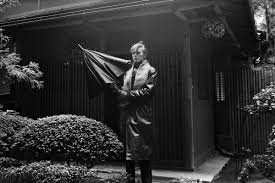
This superb book was bought for me by my fiancé for my birthday earlier in the month. Having been a massive Bowie fan since my teens it was an obvious choice. Sukita, from the early nineteen-seventies, took some of the most significant and famous photographs of Bowie. This book contains many photographs that I'd seen in the past, but that I was not aware Sukita had been involved with, so as I went through this beautiful book I was taken by surprise numerous times, which added to the pleasure. There's also some rare photographs included that I'd never seen before. The most famous photograph Sukita took was the one that ended up being used for the 'Heroes' (1977) album, however I had always loved the other photos from this session - in black and white, with Bowie in a leather jacket looking angsty and intense, revelling in his mid 1970's pomp. Fortunately many of the photographs from this session, which actually took place in Japan, despite the album being so associated with Berlin, are included here.


My favourite photo from the book. By Sukita


Sukita's most famous photograph of Bowie

I could write a significant amount of words regarding this book, however, in the end, I'd be merely gushing. One definite thing I will say is that all Bowie fans should have this book in their collection. The photographic reproductions are of a high quality. Sukita provides the text, which is obviously translated and displays a certain charming sensibility of a non-English speaker, who is also very respectful of both Bowie and the work they did together. This becomes very poignant toward the end of the book when, in 2009, Sukita took his last shots of Bowie when he was visiting New York, only one of which is reproduced here. Perhaps this is the only criticism of this book, that it could have been much bigger, with many more photographs, particularly as Sukita worked with Bowie at many different points during his career. However, like Bowie himself, Sukita comes across as someone concerned with quality control, which is totally fair enough. Reading this coffee-table, hard-back book has inspired me to look much more closely at many of these types of publications I have in my collection. In the past I've merely leafed through them, but now I'm going to read them from front to back, so expect more to appear on this blog in the future, including some more about Bowie and other of my musical obsessions.

Not quite that famous photo. By Sukita

Bowie by Sukita


Saturday, 18 September 2021

The Process - Brion Gysin (1969)


Rating: Not Rated

The Process is the first book in about fifteen years that I've abandoned. I have a fairly formal arrangement with my reading self to not abandon books I'm not enjoying, which in part probably stems from the discipline of reading for a book club, particularly as I facilitate the sessions. I lasted one hundred pages before I couldn't stand it any more. The problem? Mostly because I've read too many novels like this one, with narratives that are plotless, predominately picaresque in nature and full of flaneur type characters. I love the Beat writers, in particular the great Jack Kerouac, but Gysin, here at least, does not match Kerouac's flair, technical prowess and wide-eyed wonder at the world. Instead, the main protagonist, Ulys O. Hanson, sets out from Morocco to travel across the Sahara Desert, with no luggage save for a hefty bag of 'Keff' that he smokes continually in a pipe. Apparently Hanson meets with the famous Master Musicians of Jajouka and L. Ron Hubbard along the way, but I didn't get that far, worn down by Hanson's stoned wanderings and descriptions of the desert people, the landscape and the mystical trances those he allows to puff on his pipe go through. It's mildly engaging, but I couldn't get rid of an impatient itch inside me that grew until I couldn't stand it any more. I used the excuse of having to begin the next book club novel to bail.

Gysin and Burroughs with the Dreamachine

Brion Gysin (1916 - 1986) himself was quite an interesting character however, a friend of William S. Burroughs and inventor of the 'cut-up technique' of constructing narrative, of which Burroughs embraced wholeheartedly for a series of startling novels from the 1950's until his death in 1997. Gysin was predominately an artist, poet and performance artist and also inventor of the Dreamachine, a stroboscopic device that induced patterns of colour when viewed with eyes closed. Far out man. The Process is Gysin's main novel, with other publications mostly featuring poetry and short fiction, including The Third Mind (1978), co-authored with William Burroughs. Alas, such a pedigree of creative spirit and connections was not enough to propel me forward through to the end of The Process, so in fairness I'm not going to rate this book, only the second in the ten year history of this blog not to be rated. 


Monday, 6 September 2021

Lyonesse II: The Green Pearl - Jack Vance (1986)


Rating: Excellent

Jack Vance was such a superb writer, his prose is just so vivid and classy that even though The Green Pearl is not quite up to the quality of the first book in the Lyonesse trilogy, Suldrun's Garden (1983), it is still an immensely satisfying read. The Green Pearl follows the adventures of many of the characters from the first book, particularly Aillas, who is now the king of the southern island of the Elder Isles, Troicinet. Although the novel begins with the sinister movements of the evil green pearl, which appeared at the end of the first novel, a great deal of the narrative follows Aillas' political and military adventures. Whilst the magical forest of Tantrevalles featured strongly as a setting in the first book, here it is the barren and mountainous region of Ulfland that dominates. Aillas battles the Viking-like Ska, who have declared themselves at war with the rest of the world and occupy much of Ulfland. Aillas' wizard ally, Shimrod, appears again and gets caught up in attempting to satisfy his carnal desires with the mysterious Melancthe, who comes across, somewhat humorously, as a parody of a goth (as in goths from the late 70's music scene...).This is just some of the colourful adventure and political intrigue featured as the novel steadily builds its narrative arc.

Cover art from another edition

Once again Vance sends his protagonists on long adventures during which they face dangers both of the practical and the magical kind. It's entertaining stuff and I would imagine that this narrative form was aimed at players of Dungeons and Dragons, who would have been strongly drawn to many of the tropes featured  throughout the novel. My favourite part of The Green Pearl comes towards the end, when the beautiful princess, Glyneth, is kidnapped by the obnoxious Visbhume, a somewhat mediocre wizard, and is taken to the parallel world of Tanjecterly, where humans can live, but are threatened by all kinds of monstrous creatures. This section is wildly imaginative and exciting, with Glyneth going against type as a helpless princess, taking things into her own hands. The Green Pearl has much to recommend, including characters with depth and dialogue that sparkles with verve and complexity. The world-building is sophisticated and features an array of characters with brilliant names and unusual characteristics. As far as trilogies go, The Green Pearl is typical in that although it features a multitude of narrative pleasures, it does come across as a bridging novel, and therefore suffers slightly as a consequence. However, from what I've heard from those in the know the third novel, Madouc (1989), is a fine end to the trilogy, so I'm looking forward to reading that in the near future.